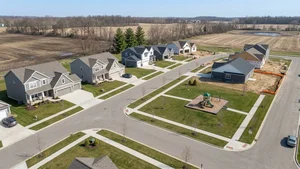
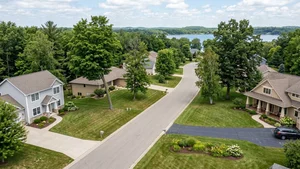
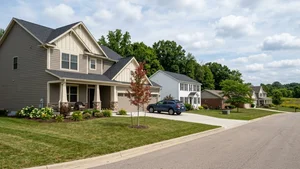
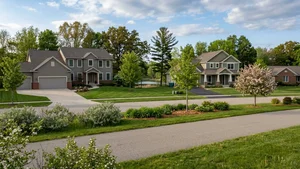
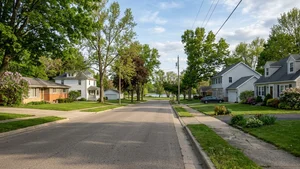
Hastings, MI sits in that middle ground between Grand Rapids and Kalamazoo - far enough from either city to feel like its own market, close enough that buyers priced out of the bigger metros are starting to pay attention. As of mid-2026, the median home sale price in the 49058 zip code runs around $251,500, which gives the Hastings, MI housing market a meaningfully lower entry point than most of what surrounds it.
If you're looking at investing in Hastings, MI real estate, this Barry County market has real options in both long-term leasing and short-term stays. Whether either one works for you comes down to three things: where rents are actually headed, what the city's property tax rate does to your numbers, and whether local zoning permits what you're planning to do with the property.
Evaluating the Hastings Market for Investors
The gap between estimated home values and actual sale prices is wider here than you'd expect. Some platforms put typical values around $203,500, but recent MLS data shows median sale prices closer to $252,000. That spread matters when you're underwriting a deal.
On the rent side, median monthly rent for a home in Hastings falls somewhere between $1,192 and $1,400 depending on the source - Zumper reported around $1,197 for early 2026. Rental yield is a function of both numbers, so use the sale price data and rent data from comparable sources, not one from each end of the range.
Current Home Prices and Appreciation
Price signals have been mixed over the last year. Some estimates show flat or slightly declining year-over-year trends, but listing prices have held firm - Movoto reported median list prices around $289,000 in July 2026, which tells you sellers aren't panicking on move-in-ready inventory.
Watch your days on market and sale-to-list ratios. Those two metrics will tell you more about your negotiating position than any headline number. Condition also drives price dramatically here, so buyers shopping for wholesale real estate or distressed properties are working from a very different baseline than buyers targeting turnkey rentals.
Population and Demographic Trends
Hastings hit a slight population peak around 2021 and has essentially plateaued since. Current 2026 estimates put the city at roughly 7,489 residents, with a very slight annual decline over the past few years.
That's not a red flag - it's just a realistic picture. Rental demand here is steady, not surging. You're not betting on an influx of new transplants; you're serving an established local workforce. Build that into your vacancy assumptions accordingly.
Local Data and Operating Costs
Property taxes in Michigan can quietly wreck a deal that looks fine on paper, so get your numbers right before you close. The effective property tax rate in Barry County averages between 1.11% and 1.21%.
Inside the Hastings city limits, that rate steps up to approximately 1.36%. On a typical home, that works out to a median annual tax bill of around $2,034. Run that through your monthly expense model before you ever get to cash flow.
Assessing Additional Residential Expenses
Taxes are the most predictable cost - insurance, maintenance, and property management fees add more variability. Commercial real estate in Hastings carries different tax implications and insurance requirements than a standard single-family rental, so don't let those lines blur.
Before closing, look hard at the age of the property. An older home that needs a roof or an HVAC system in year one will erase a lot of projected cash flow, and those surprises are largely avoidable with a thorough inspection.
Securing Financing for Investment Properties
Most conventional lenders want 20% to 25% down on an investment property loan. With the median sale price around $251,500 in this market, that means showing up with roughly $50,000 to $63,000 at the table.
Expect your interest rate to run higher than what you'd get on a primary residence. Shop multiple local and national lenders - the spread between offers on investment loans can be significant, and it compounds over a hold period.
Strategies for Building a Local Portfolio
The two most common approaches buyers bring to Hastings are buy-and-hold residential rentals and fix-and-flip projects. Both work here. Neither one is forgiving if you ignore the underlying formulas.
A lot of investors from the Grand Rapids metro area target Hastings specifically for buy-and-hold cash flow. Others come in looking for distressed properties to renovate and sell. The strategy that fits you depends on your timeline, your capital, and your tolerance for the construction process.
Long-Term Rentals and the 1% Rule
The 1% rule - where monthly rent equals at least 1% of the purchase price - is a quick screen, not a final verdict. At median home prices near $252,000 and median rents around $1,200 to $1,400, you're not going to hit that threshold on a standard listing. You'll need to find a below-market deal or a multi-unit property to get there.
The more realistic path in this market is the value-add play - buy something with room to improve, raise the rent after the work is done, and let the improved rent justify the price you paid. The 2% rule is largely out of reach on turnkey inventory here, so don't let that chase you off deals that still pencil at more modest yields.
House Flipping and the 70% Rule
The 70% rule is simple: pay no more than 70% of the after-repair value minus your estimated repair costs. If a renovated home in Hastings will sell for $280,000 and needs $40,000 in work, your maximum purchase price is $156,000.
That ceiling exists for a reason. Construction costs run over, markets shift, and the buffer the 70% rule builds in is what keeps a project from turning into a loss. Don't negotiate yourself past it.
Short-Term and Month-to-Month Rentals
Flexible lodging - whether furnished monthly rentals or nightly stays - does have a real market in Hastings. Traveling professionals and visitors coming through Barry County create demand for something other than a traditional annual lease.
The other thing working in your favor is the regulatory environment. Hastings is considerably less restrictive than a lot of Michigan cities that have moved to cap or heavily regulate short-term rentals.
Local Regulations for Short-Term Stays
As of 2026, Hastings has no city-specific short-term rental ordinance. Short-term rentals are permitted, and the city handles them under standard housing and rental regulations - no specific caps, no lot-distance rules.
You do still need to follow Barry County zoning ordinances and standard building and fire safety codes. One detail that catches operators off guard: you'll need to self-remit Michigan's 6% use tax on rental income to the Department of Treasury. Booking platforms don't automatically collect it for this area, so that's on you.
Furnished and Flexible Leases
Month-to-month furnished rentals occupy a useful middle ground. They typically command higher monthly rates than a traditional annual lease without the daily turnover demands of a nightly rental operation.
Keep the furnishings durable and easy to clean, and build utilities into the monthly rate. That structure tends to attract tenants willing to pay a premium for the convenience, which is exactly what makes this model worth running.
Frequently Asked Questions
What are the best areas in Hastings, MI to buy investment properties?
It depends entirely on your strategy. Commercial real estate near the city center follows a different logic than single-family homes in established Barry County subdivisions. Either way, localized rent rates and the city's property tax rate - approximately 1.36% within city limits - should be part of your analysis before you make an offer.
Do I need a local city license or permit to operate a rental property in Hastings?
Hastings doesn't currently have a city-specific short-term rental ordinance or a separate permitting system for vacation rentals. All rental properties still need to comply with Barry County zoning laws and standard building and fire safety codes.
How much down payment is typically required for a real estate investment loan in the Hastings market?
Most conventional lenders require 20% to 25% down on an investment property. With the median sale price in the 49058 zip code around $251,500, plan on putting down roughly $50,000 to $63,000.
Is it more profitable to flip houses or hold long-term rentals in Hastings right now?
Neither answer is right without knowing your purchase price and your timeline. Flipping can generate a faster return if you stick to the 70% rule. Long-term rentals offer steady cash flow from median rents of $1,200 to $1,400 per month. The better question is which model fits your capital structure.
Are there any strict zoning laws or restrictions for short-term rentals and Airbnbs in the Hastings area?
No city ordinances restrict short-term rentals in Hastings. You're required to follow general housing regulations, and you'll need to manually remit Michigan's 6% use tax on rental income - that doesn't come out automatically through booking platforms.
How long does it usually take to find reliable tenants for a rental home in Hastings, MI?
There's no single answer, but the two biggest variables are the property's condition and how close your asking rent is to the city's median of roughly $1,197. With a local population of around 7,489 that's relatively stable rather than growing, getting the listing in front of people means spreading it across multiple regional platforms rather than counting on foot traffic.