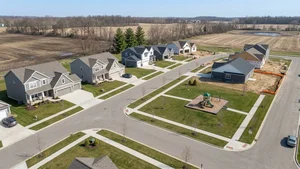
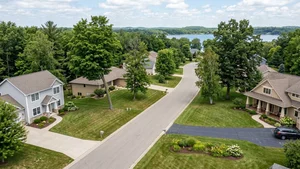
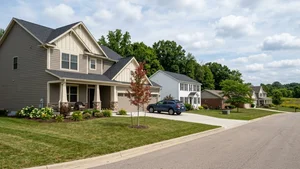
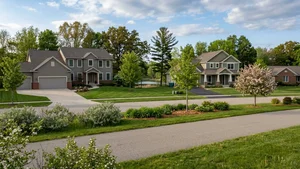
The housing market in Caledonia, MI moves fast. The median sale price is sitting around $439,675, and homes are going under contract in roughly seven days. If you're serious about buying here, you need to understand what property taxes are actually going to cost you - because that number has a real impact on your monthly payment, and an escrow shortage after closing is not how you want to start homeownership in the 49316 zip code.
Current Property Tax Rates in Caledonia
Caledonia's median effective property tax rate runs about 0.81%. To put that in context, the Michigan state median is 1.05% and the national median is 1.02% - so you're below both.
What you actually pay will depend on your specific school district and any local special assessments attached to the property. The Caledonia Charter Township operating millage for 2025 was set at 0.664 mills, which funds a general budget of over $3 million for the township's 16,000 residents. That 0.664 is just one piece of your total bill, but it's a good anchor for understanding how the math stacks up.
Comparing Caledonia to State Averages
Statewide, Michigan's effective property tax rate generally clusters between 1.18% and 1.28%, depending on location and how you calculate it. Caledonia residents typically land below that range. Buyers coming from high-tax states usually notice - Michigan's rates are moderate, and Caledonia's 0.81% effective rate makes monthly cost projections a little easier to stomach.
How the Township Millage Works
A millage rate is the amount you pay per $1,000 of taxable value. The township's 0.664 operating millage is your starting point, but it's not the whole picture.
Your final combined millage folds in county taxes, local school district funding, and library services. Multiply your home's taxable value by that combined rate to get your annual obligation.
Calculating Your Caledonia Property Tax Bill
Michigan's property tax system runs on Proposal A, and if you're not familiar with it, here's what matters most: it limits how much your property taxes can increase each year while you own the home. That's good news for long-term owners - but it creates a trap for buyers who look at the current owner's tax bill and assume their costs will be the same.
They won't be. You need to understand two specific numbers before you can estimate what you'll owe.
State Equalized Value vs. Taxable Value
The State Equalized Value - SEV - is set at half of your home's estimated true cash market value. Buy a home at the median price of $439,675, and your initial SEV will likely land around $219,837.
Your Taxable Value is the number that actually drives your bill. Under Proposal A, your Taxable Value can't increase by more than 5% or the rate of inflation - whichever is lower - as long as you stay the owner. That cap is the whole point of the system.
Estimating Your Bill by Home Value
When a property changes hands, the Taxable Value uncaps and resets to match the SEV for the following tax year. This is the number buyers miss. Calculate your future taxes off your purchase price - not off what the current owner has been paying under their capped value.
The math is straightforward: divide your expected SEV by 1,000, then multiply by the local combined millage rate. Local government portals let you plug in a specific address or purchase price to get a detailed estimate based on current rates.
Sales Tax Rates in the 49316 Zip Code
Michigan runs a flat 6.00% state sales tax, and that's the whole story. The state doesn't allow counties or cities to layer additional local sales taxes on top of it, so the combined rate in Caledonia is exactly 6.00% - no exceptions, no municipal add-ons.
Budget that 6.00% for furniture, appliances, and home improvement materials after closing.
Combined Sales Tax Breakdown
Kent County and Caledonia Township don't add local surcharges, so there's nothing to track beyond the state rate. The 6.00% applies whether you're shopping inside the township or anywhere else in Michigan. You won't find a better rate by crossing municipal lines.
How Sales Tax Impacts Home Buyers
Real estate transactions themselves aren't subject to standard retail sales tax - but everything you buy to outfit the house is. Build 6.00% into your post-closing budget for retail purchases.
The same rate applies to materials your contractors supply for renovation work. It gets folded into your project invoice, so it's not a line item you'll see separately - but it's there.
Finding and Paying Your Tax Bill Online
Property owners in Caledonia get two separate tax bills each year. The township handles collection for both cycles, and the whole process is manageable through the local online portal.
Using the BS&A Online Portal
The BS&A Online portal for the Charter Township of Caledonia lets you search by address to pull up past payments, current amounts due, and detailed assessment histories. You can also pay directly through the system.
If your mortgage lender isn't holding your taxes in escrow, this is where you'll submit payments. Get familiar with it before your first bill arrives.
Summer and Winter Due Dates
Summer taxes are billed during the first week of July and due on September 14. Winter taxes go out the first week of December and must be paid by February 14.
Miss those dates and you're looking at late fees and interest. If you close mid-cycle, your closing disclosure will show prorated tax amounts - that's normal, but check the numbers before you sign.
Exemptions to Lower Your Property Taxes
Michigan has real programs that can reduce what you owe, and they can make a meaningful difference in your annual combined millage rate. None of them attach automatically to a new deed. You have to apply.
The Principal Residence Exemption (PRE)
The PRE is the one every owner-occupant should file immediately. It exempts a qualifying owner-occupied home from up to 18 mills of local school operating taxes - that's a significant reduction.
File a PRE affidavit with the local assessor to claim it. The standard deadline is June 1, with secondary deadlines available later in the year for certain situations. Investment properties and second homes don't qualify.
Senior Citizen Property Tax Credits
If you turn 65 by December 31 of the tax year, you may qualify for the Michigan Homestead Property Tax Credit. The program refunds 100% of the amount your property taxes exceed 3.5% of total household resources, up to a cap of $1,200.
For the 2025 tax year (the most recent data available), total household resources generally can't exceed roughly $71,500 to claim any credit. The benefit starts phasing out when household resources reach about $62,500.
New Construction and Special Assessments
New builds come with a tax wrinkle that catches a lot of buyers off guard. Your first bill often reflects only the value of the vacant land - the structure hasn't been fully assessed yet.
Once the township assesses the completed home, your taxable value adjusts to reflect the whole property. That adjustment can feel sudden if you weren't expecting it.
Assessing New Homes in Kent County
Assessors evaluate new construction based on the completion percentage as of December 31 each year. Buy a home finished in January, and your first tax bill might look surprisingly low - followed by a substantial jump the next year.
Base your budget on the final purchase price of the completed home. If you're working from the builder's current tax bill, you will end up with an escrow shortage.
Managing Special Assessments
Caledonia properties can carry special assessments for local infrastructure - drains, roads, sewers. These show up as separate charges on your summer or winter tax bill, and they vary by property.
Your title company will check for outstanding special assessments during the purchase process. Ask directly whether those costs get paid off at closing or whether you'll be taking over the remaining annual installments.
Frequently Asked Questions
Do property tax rates differ if I live in the Village of Caledonia versus Caledonia Township?
Yes, rates can differ. The total combined millage varies depending on specific local jurisdictions, school districts, and special assessments tied to the property's exact location.
When are summer and winter property tax bills due in Caledonia, MI?
Summer taxes are billed the first week of July and are due on September 14. Winter taxes are billed the first week of December and are due on February 14.
How do I claim the Principal Residence Exemption (PRE) for my new home in Caledonia?
You must file a PRE affidavit with the local assessor to prove the home is your primary residence. The standard deadline to file is June 1.
Will my property taxes uncap and increase after I purchase a house in Caledonia?
Yes. Under Michigan law, a property's taxable value uncaps the year following a sale and resets to equal the State Equalized Value (SEV), which is half of the current market value.
What are the steps to appeal my property tax assessment with the Caledonia Township Board of Review?
Homeowners must submit an appeal to the local Board of Review after receiving their annual assessment notice. You'll need to provide evidence - such as recent comparable home sales - to argue that the assessed value is too high.
Where and how can I pay my Caledonia property tax bills online?
You can pay through the BS&A Online portal for the Charter Township of Caledonia. Search for your address and submit payments electronically through that system.