The median sale price for an existing home in the Byron Center, MI housing market is roughly $610,000. Existing properties are moving fast - an average of just 6 days on the market - and with inventory hovering around 32 available homes, you're essentially competing against every other serious buyer in the township at the same time.
That pressure is exactly why a lot of buyers start looking at new construction. Building your own home in Byron Center means you get the floor plan and finishes you actually want, without writing an escalation clause on someone else's house. It's not a simple process, though. You'll need a clear picture of Kent County land prices, labor rates in the Grand Rapids metro, and what Byron Township is going to charge you to pull permits before you can make an informed call.
How Much It Costs to Build in Byron Center
Byron Center sits in Kent County, about 15 minutes southwest of downtown Grand Rapids. That proximity matters for your budget. Because it's part of the Grand Rapids-Wyoming metro area, labor and material rates track with regional averages - you're not getting the breaks that buyers find in cheaper, more rural parts of Michigan.
Expect total custom build costs to run anywhere from $350,000 to well over $700,000, not including land. Whether you're buying a lot in an established subdivision or starting with raw acreage changes that number significantly.
Total Cost Range in the Market
A custom build requires more cash upfront than buying an existing house. You're budgeting for the physical structure, yes, but also for site preparation and utility connections before a single wall goes up.
Most local builders price their base packages around a standard level of finishes. The moment you start swapping in hardwood floors or custom cabinetry, your number moves toward the top of that range quickly.
How the Location Shifts the Price
Being 15 minutes from downtown Grand Rapids is convenient - and that convenience is priced into the land. If you purchase an improved lot in an existing development, you save on utility installation but pay for the location. Developing raw land flips that equation: lower lot cost, but you're paying for clearing, grading, and potentially a well and septic system out of pocket.
Breaking Down the Price Per Square Foot
In the 49315 ZIP code, custom construction typically ranges from $150 to $250 per square foot for the structure alone. That figure shifts based on the complexity of the roofline, the number of bathrooms, and the quality of interior finishes.
One thing worth understanding: a sprawling ranch costs more per square foot than a two-story home of the same size. You're spreading a larger foundation and more roofing material across the same livable square footage, so the math doesn't favor going wide.
Per-Square-Foot Benchmarks
Production builders in subdivisions generally offer the lowest cost per square foot because they're building at scale. Custom builders charge more because every detail is specific to your project. Those aren't the same product, and the per-square-foot number alone won't tell you which one you're getting.
Ask builders precisely what their quote covers. Many exclude the lot, site prep, and permit fees from the baseline figure - which can quietly blow your budget if you're not reading the fine print.
Cost by ZIP Within the Area
While 49315 covers Byron Center broadly, your total cost shifts depending on how close you are to the Grand Rapids city limits. Lots nearer to the metro carry higher land values. Labor rates stay relatively consistent across the township, so the variation you'll see in total project cost usually comes down to land value and whatever exterior material requirements the HOA has imposed.
Estimating Your Budget by House Size
Square footage is the most straightforward driver of your baseline cost. As the floor plan grows, total price rises - even if the cost per square foot eases slightly due to economies of scale. A larger footprint also means higher long-term costs for heating, cooling, and property taxes in Kent County, so it's worth being honest with yourself about how much space you actually need.
Small Homes (1,200 to 1,500 Square Feet)
This size range is often the most cost-effective entry point for a custom build. The structure itself generally runs between $180,000 and $300,000. These footprints work well on narrower lots, and buyers building here tend to lean on open floor plans to make the space feel larger.
Mid-Size Homes (2,000 to 2,500 Square Feet)
This is the range where most buyers relocating to the Grand Rapids metro land. Building 2,000 to 2,500 square feet typically runs between $300,000 and $500,000. At this size, a second floor, multiple bathrooms, and a dedicated home office become realistic - but each of those rooms adds plumbing and electrical costs that aren't always obvious when you're looking at a floor plan.
Large Homes (3,000+ Square Feet)
Custom homes over 3,000 square feet usually start around $450,000 and can push past $750,000 depending on the design. Luxury upgrades - custom tile showers, extensive millwork, three-car garages - are common at this scale. If you're building here, secure your construction financing early. These projects move quickly once they start.
What You Get for Your Budget in Kent County
Setting a firm budget before you talk to a single builder prevents the mid-project conversations nobody enjoys. Your spending power in Byron Center depends heavily on whether you already own land or need to buy a lot first - that purchase alone will consume a meaningful share of your total funds.
Here's how the numbers break down for the physical structure at different price points.
What $200,000 Builds
This is a tight budget for new construction in this market unless you're acting as your own general contractor. At $200,000, you're generally looking at a modest 1,000 to 1,200 square foot home with basic finishes - vinyl siding, laminate countertops, standard fixtures. It also assumes you already own the land outright and don't need significant site preparation.
What $300,000 Builds
With $300,000, you can typically construct a comfortable 1,500 to 1,800 square foot house with some room for a few upgrades, like granite kitchen counters or a slightly larger garage. Buyers at this level often work with semi-custom builders who offer pre-designed floor plans. Modifying an existing plan costs less than hiring an architect to start from scratch.
What $500,000 Builds
This is where you get real flexibility in the 49315 ZIP code. A $500,000 construction budget generally delivers a 2,000 to 2,500 square foot home with premium materials, high-end appliances, energy-efficient HVAC systems, and outdoor living space. It also gives you a cushion if site preparation turns out to be more involved than expected.
Where Your Construction Budget Goes
A construction bid isn't one number - it's a stack of line items, and knowing what's in each one tells you where you have leverage. Framing and foundation work typically represent the largest single expense in the structural build, but site preparation can drain your budget fast if the land needs extensive clearing or leveling.
Land and Site Prep
Before anyone pours concrete, the lot needs to be cleared, graded, and connected to utilities. Raw land means you're also paying for soil testing, tree removal, and potentially a private well and septic system. An improved subdivision lot requires minimal prep. A wooded parcel is a different story.
Foundation, Framing, and Materials
The foundation and lumber frame are the skeleton of the house, and material prices move with supply chain conditions in the Grand Rapids metro. Lumber, concrete, and roofing are standard commodities, but their installation requires skilled labor. A complex roofline or a full basement increases both.
Permits and Finishes
You'll need to secure building permits from the local township before construction begins - those fees cover plan reviews and the multiple on-site inspections that happen throughout the build. Finishes are the other variable: flooring, cabinetry, and lighting are where you have the most control, and where buyers most often discover they've underestimated their own preferences. Choosing luxury fixtures can add tens of thousands of dollars to the final bill.
Comparing Building vs. Buying in Byron Center
The median sale price for an existing home in Byron Center is roughly $610,000. With 32 homes on the market and an average of 6 days before they go under contract, buying existing means making fast decisions with limited options.
Building takes longer and often costs more per square foot than a resale. But a new build comes with no immediate renovations, modern energy efficiency, and the knowledge that the roof, HVAC, and appliances won't need replacing for at least a decade.
The Build vs. Buy Math
Buying a $610,000 existing home locks in your price on day one. Building a custom home with the same total budget might yield a slightly smaller floor plan once land acquisition and site prep come out of the number. That tradeoff is real - the question is whether the ability to control the design is worth it to you.
Building Up vs. Out
If you're trying to maximize square footage on a fixed budget, a two-story design is more cost-effective than a ranch. Two stories means a smaller foundation and less roofing material. A ranch requires a larger footprint, which means more excavation and more concrete. Talk through these structural tradeoffs with your architect before the design gets too far along - changes get expensive quickly once plans are finalized.
Steps to Constructing Your Home
The path to a finished house starts well before the first shovel hits the ground. You'll spend several months in the planning phase before construction begins - securing land, finalizing designs, and working through local regulations. Getting the right financing in place and assembling a solid team are the first two things to do.
Buying Land and Getting Permits
Start with finding a suitable lot in Kent County. Once you have land, you'll submit blueprints to the building department for review and obtain the necessary permits before any clearing or excavation begins. The township conducts inspections at multiple stages - framing, electrical, plumbing - so plan for that process to be ongoing throughout the build.
Choosing a Builder vs. Building Yourself
Most buyers hire a licensed general contractor, and for good reason. A professional builder manages subcontractors, orders materials, and keeps the project on schedule. Some buyers choose to act as their own general contractor to save money, but that route requires significant construction knowledge, daily site visits, and a strong network of local tradespeople. It's not a shortcut so much as a different kind of full-time job.
Financing a Construction Build
Unless you're paying cash, you'll need a construction loan. These loans disburse money in stages - called draws - as the builder completes specific milestones. Once the house passes final inspection, the construction loan typically converts into a standard permanent mortgage. Get pre-approved before you purchase a lot. It changes what you can realistically look at.
Exploring Local New Construction Options
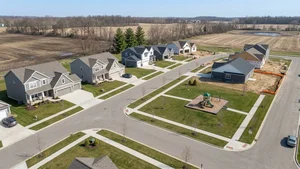
If managing a custom build from scratch sounds like more than you want to take on, buying in a new construction community is a reasonable middle ground. Byron Center has several active developments managed by regional builders, and these communities offer a streamlined process where the builder owns the lot and presents a set menu of floor plans.
That structure reduces decision fatigue and gives you a firmer timeline than a fully custom project.
Working with a Local Builder
In a planned subdivision, you'll work directly with the developer's sales team. You can still select finishes and make minor structural modifications from their approved list - it's not a take-it-or-leave-it situation, but your options are more defined. This route moves faster than a fully custom build because the builder already holds the master permits for the neighborhood. Read the HOA rules before you sign anything.
Frequently Asked Questions
What is the average cost per square foot to build a custom home in Byron Center, MI?
In the 49315 ZIP code, custom construction typically ranges from $150 to $250 per square foot for the structure alone. That estimate doesn't include the lot, site preparation, or permit fees. Upgraded finishes and complex designs push the number higher.
Should I buy vacant land in Byron Center first, or hire a builder before I start looking at lots?
Hiring a builder first is often the smarter move. A builder can evaluate a lot in Kent County before you commit to it, identifying hidden site preparation costs and confirming whether your floor plan will physically fit on the parcel.
Will my new construction home require a well and septic system, or can I connect to Byron Township utilities?
It depends on where your lot is located. Parcels in established subdivisions closer to the Grand Rapids metro area typically have access to municipal water and sewer lines. Build on acreage in a more rural part of the township and you'll likely need a private well and septic system.
How long does it typically take to get building permits and complete a new house in Byron Center?
The full process generally takes eight to twelve months. Obtaining permits and finalizing designs can take a few months upfront. Once construction begins, the physical build usually requires six to nine months, depending on weather and material availability.
Is it more expensive to build on private acreage compared to buying a lot inside a new Byron Center subdivision?
Yes. Building on private acreage typically carries higher upfront costs - you're paying for site preparation, utility trenching, and clearing. Subdivision lots are usually pre-graded with utilities already pulled to the property line, which removes a significant chunk of that early expense.
What are the zoning restrictions and minimum lot sizes for building a house in Byron Township?
Zoning restrictions dictate setbacks, building heights, and lot coverage limits. The minimum lot size depends on the specific zoning district where your land is located. Check with the local building department to verify the exact requirements for your parcel before you finalize any plans.