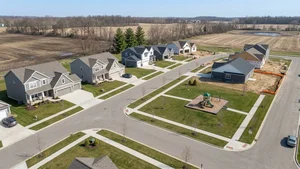
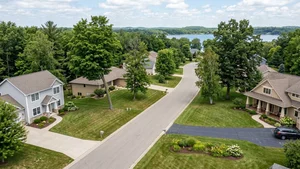
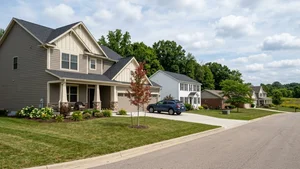
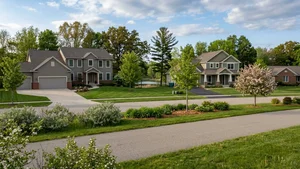
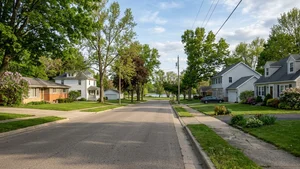
The median home sale price in the Byron Center, MI housing market sits around $610,000 as of mid-2026, with homes spending roughly six days on the market. If you're researching property in this part of Kent County, you're looking at a market defined by long-term appreciation and steady population growth - not a slow, patient environment where you can afford to deliberate for weeks.
Whether you're planning to buy and hold single-family homes or explore commercial real estate, the local numbers deserve a close look before you commit. Kent County gives you a strong backdrop, and Byron Center specifically offers a combination of rental demand and value growth that doesn't show up everywhere in this region.
Evaluating the Byron Center Real Estate Market
Six days on market. That's the average, and it tells you almost everything you need to know about the pace here. About 30% of transactions are closing above asking price, which means you're not just competing - you're competing against buyers who are already prepared to go over.
For buy-and-hold investors, the long-term picture is worth understanding before you fixate on today's prices. Property values in the area have appreciated by approximately 112% over the past decade, which works out to a 7.81% average annual appreciation rate. The current median sits around $610,000, but buyers who've held here over multiple years have seen that historical trajectory work in their favor.
The supply situation sits at roughly 3.2 months of available housing. Some analysts call that balanced; others call it a seller's market. Either way, the practical reality is the same - if you find something that works, move on it, and don't stretch your budget to do it.
Local Data and Population Trends for Investors
Byron Center has grown steadily. The 2020 census recorded 7,431 residents, up from 5,822 in 2010, and the local population is still expanding at an estimated 1.1% annually. For rental investors, that consistent growth matters - it means a steady stream of prospective tenants rather than a market you're fighting for every lease.
On the rent side, median rent estimates in the area run from $1,490 to $1,608 per month, with average apartment rents sitting a bit lower at $1,319 to $1,324. Set against local property prices, that puts your gross rent-to-price ratio somewhere in the range of 0.3% to 0.35% per month. That's not a number that makes cash flow easy, so you'll want to run your projections carefully.
Property taxes help the math slightly. A typical Byron Township parcel within the local school district carries an effective rate near 0.74% - meaningfully below the broader Kent County effective rate of roughly 1.03%. For a landlord running a tight margin, that difference adds up over a year.
Common Investment Strategies and Financial Rules
Buy-and-hold rentals are the most common approach here, and the logic is straightforward: purchase a property, place tenants, use the rental income to cover the mortgage while the home appreciates over time. Most investors evaluating these deals start with the 1% or 2% rule - the idea that a property should rent for 1% to 2% of its purchase price each month. At $610,000, that benchmark is genuinely hard to hit with Byron Center rents, which is why the appreciation story matters as much as it does here.
House flipping works differently. You're buying distressed properties, renovating them, and selling at a profit - cash flow isn't the point, the margin on the exit is. The standard framework is the 70% rule: pay no more than 70% of the home's after-repair value (ARV) minus your estimated repair costs. Discipline on the buy side is everything in a flip.
Alternative Guidelines for Real Estate Portfolios
The 3-3-3 rule is worth knowing if you're building out your first investment portfolio. The approach involves saving three months of personal living expenses, three months of mortgage payments for the investment property, and establishing a three-year plan for the asset. It's a buffer strategy - designed to keep you solvent through a vacancy or an unexpected repair without forcing a bad decision.
The 7% rule gives you another benchmark. It suggests real estate investors should aim for an annual return on investment of at least 7%, which historically aligns with average stock market returns. Given Byron Center's historical 7.81% annual appreciation rate, long-term holders have typically met that threshold through equity growth alone - though equity and cash in your pocket are two different things, and it's worth keeping that distinction clear in your projections.
Month-to-Month and Short-Term Rental Opportunities
Not every investor here is signing 12-month leases. Furnished, month-to-month rentals serve corporate workers, traveling nurses, and buyers waiting for a permanent home to close - and they typically command higher monthly rates than standard unfurnished units. That premium can help close the gap between Byron Center's home prices and the local rent averages.
Short-term rentals are another option, though the management load is heavier. A useful starting framework is the 75/55 rule: a property is likely viable as a short-term rental if it can hit 75% occupancy at a daily rate that's 55% higher than the equivalent long-term daily rent. The catch is that utilities, furnishings, and cleaning costs all run higher on short-term units. Before you commit to a furnished rental strategy, run the side-by-side comparison against what a standard annual lease would actually net you.
Finding Investment Properties in the Area
Inventory is tight. Recent data shows roughly 32 available homes in the area, so you don't have the luxury of a slow, methodical search. Set up automated MLS alerts and be ready to tour properties the day they hit the market - not the weekend after.
The right property depends entirely on your strategy. A turnkey single-family home makes sense if you want immediate rental income with minimal renovation risk. If you're working with the 70% rule, you're looking for something different - distressed properties, estates, or homes that need cosmetic work where you can force appreciation rather than pay for it upfront.
Commercial real estate is a separate conversation altogether. Multi-family buildings, small retail spaces, and mixed-use properties operate on different financing and valuation models than single-family homes, and buyers interested in that side of the market should be working with a commercial broker from the start.
Steps to Start Building Your Portfolio
Get your financing sorted before you start making offers. Investment property loans typically require a 20% to 25% down payment and carry slightly higher interest rates than primary residence mortgages. Lenders will look at your debt-to-income ratio and may factor in a portion of projected rental income to help you qualify - worth knowing before you sit down with a bank.
As you evaluate properties, pay attention to the issues that can permanently cap a home's value: unpermitted additions, foundation problems, outdated electrical systems, proximity to major highways or industrial sites. Cosmetic issues are manageable. Functional obsolescence is a different problem entirely, and it doesn't go away after closing.
Work with a local agent who actually knows investment properties - not just the residential market in general. The right person can pull rental comparables, give you a realistic read on repair costs, and help you put together an offer that's competitive without being reckless.
Frequently Asked Questions
Which neighborhoods in Byron Center, MI offer the best ROI for long-term rental property investors?
It comes down to the specific property and purchase price more than any single neighborhood. The broader area carries an average annual appreciation rate of 7.81%, but the deal-level numbers - your gross rent-to-price ratio on that individual home - are what actually determine your return.
Does Byron Township have strict zoning rules or restrictions against Airbnb and short-term rentals?
You'll need to check current Byron Township ordinances directly for the most up-to-date rules on short-term rentals. Local regulations can dictate permit requirements, occupancy limits, and where short-term rentals are permitted to operate - and those rules change, so don't rely on what someone told you a year ago.
How does the cost of investing in Byron Center real estate compare to neighboring Grand Rapids or Wyoming?
Byron Center carries a median home sale price around $610,000, shaped by its steady population growth and strong buyer demand. Compare that directly against current pricing in Grand Rapids or Wyoming to see which market fits your investment budget - the spread between them matters depending on your strategy.
What should I expect to pay in non-homestead property taxes for an investment home in Byron Center?
A typical parcel in the local school district carries around 28.6 mills, with an effective property tax rate near 0.74%. Non-homestead properties face additional millage on top of that, so talk to the local assessor for the exact rate that would apply to your specific rental property.
What are the biggest permit or inspection pitfalls to watch out for when flipping houses in the Byron Center area?
Structural issues, unpermitted previous work, and outdated mechanical systems are the primary problems that erode flip margins. Always run a thorough inspection and verify past permits with the township before you buy - not after.
How quickly are tenant vacancies typically filled for single-family homes in the Byron Center school district?
The local population is growing at roughly 1.1% annually, which keeps a steady flow of prospective tenants coming into the area. Specific vacancy times vary by property, but that consistent growth supports rental demand across the district in a way that a stagnant or declining population simply wouldn't.