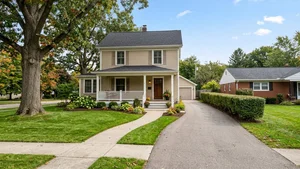
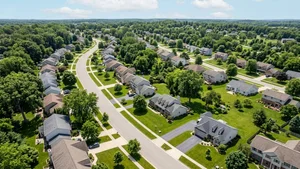
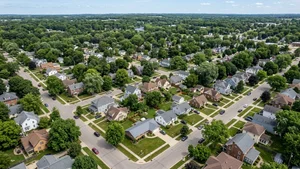
The median home price in Hastings, MI sits around $251,500 - a number that gets a lot of buyers' attention when they start looking beyond the immediate Grand Rapids metro area. If you've driven through downtown, you've probably already noticed the late-19th-century architecture and the sense that this place has been here a while and knows it. That's not an accident. It comes from a specific history, and understanding it tends to change how people think about living in Hastings before they ever look at a listing.
From its early days as a riverside settlement to its role as a production hub for military airplane parts during World War II, Hastings has held a steady, quiet presence in West Michigan. Here's what you should know.
An Overview of Hastings and Its Location
Hastings is the county seat of Barry County, Michigan. It sits within the Grand Rapids-Wyoming-Kentwood Metropolitan Statistical Area, which means residents have a workable commute to the larger urban centers in West Michigan without actually living in them.
If you're in the 49058 zip code, you'll find a genuine mix - historic properties near the city center, newer builds on the outskirts, and a municipal identity that doesn't feel like a suburb of anything.
Is Hastings a City or a Town?
People call it a town, but it's officially a city. Hastings incorporated as a village in 1855 and became a city on March 11, 1871.
That distinction matters practically. City status means Hastings runs its own municipal services, zoning regulations, and local government, and it's what solidified the place as the administrative center for Barry County rather than just a convenient stop along the Thornapple River.
The Origin of the Hastings Name
The city is named for Eurotas P. Hastings, a Detroit banker who owned the original 480-acre town-site. He never lived here - not for a single day, as far as the record shows - but his ownership of the land was enough to put his name on the map permanently.
In 1836, three men named Dibble, Kingsbury, and Kendall bought the site from him for $3,000. When they platted it into streets and lots to attract early settlers, they kept his name. Naming a new settlement after the original landowner or financial backer was standard practice during Michigan's early expansion years. The name stuck, and today it's a direct link to the state's early 19th-century land development era.
Early Settlement and City Incorporation
The formal layout of Hastings began in 1836 with that original 480-acre plat. Early growth was steady - Barry County's agricultural potential and the Thornapple River gave settlers practical reasons to put down roots.
By 1855, enough people had arrived that incorporating as a village made sense, bringing with it the governance and public infrastructure a growing number of businesses and homes required. Then, sixteen years later, on March 11, 1871, Hastings officially became a city. That transition from pioneer settlement to established regional hub didn't happen overnight, but the incorporation date is the marker most people point to.
Historic Sites and Museums in Barry County
The Barry County Courthouse is the building you'll notice first. Built between 1892 and 1893 and designed by architect Albert E. French, it pulls from Late Victorian, Queen Anne, and Richardsonian Romanesque styles in a way that shouldn't work as well as it does. It's a Michigan State Historic Site and is listed on the National Register of Historic Places, and it sets the visual tone for the entire downtown district.
If you want to go deeper into local history, Historic Charlton Park gives you a 300-plus acre historic village and museum along the Thornapple River and Charlton Park Lake. The park dates to 1936, when Irving Delos Charlton donated 210 acres to Barry County for a museum and recreation facility. It's worth an afternoon.
What Hastings Is Famous For
Two things tend to come up when people dig into the city's past: medicine and manufacturing.
Dr. William E. Upjohn practiced medicine in Hastings after the Civil War and perfected the friable pill process here before founding the Upjohn pharmaceutical company. That's a significant piece of medical history tied directly to this city. Then, during World War II, the local manufacturing sector pivoted and became a production hub for military airplane parts - a wartime contribution that's still reflected in the city's layout and local economy today.
That combination - pharmaceutical innovation and industrial output - gives Hastings a historical footprint that most towns its size don't have.
Notable People from Hastings
Dr. William E. Upjohn is the name most people know, but the list goes further. Gordon Johncock, a two-time winner of the Indianapolis 500, was born in Hastings on August 5, 1936. The city is also the hometown of art historian Charles Rufus Morey and former NFL player Greg Baty. Medicine, motorsport, academia, professional football - it's an unusual range for one small city.
Frequently Asked Questions
Which neighborhoods in Hastings, MI have the highest concentration of historic homes?
The streets surrounding downtown and the Barry County Courthouse have the densest concentration of historic homes. You're looking at late-19th-century architecture that dates back to the city's early incorporation period - the same era that produced the courthouse itself.
Are there strict zoning or historic district rules for renovating older homes in Hastings?
It depends on where exactly the property sits. Homes near official landmarks like the Barry County Courthouse may be subject to specific local preservation guidelines. Before you plan any major exterior work, talk to the city's zoning office first - it'll save you from an expensive surprise mid-project.
Do historic properties in Hastings typically sell for a premium compared to newer local builds?
Condition drives this more than age. The median sale price in the 49058 zip code is around $251,500, but a fully restored historic home near the city center can come in above that, while a property that needs significant work may sell for less. It's not automatic either way.
Are there local Barry County grants or tax credits available for restoring historic homes in Hastings?
Possibly, depending on the property's designation. Because landmarks like the Barry County Courthouse are on the National Register of Historic Places, nearby homes with historical significance might qualify for state-level preservation programs. Verify what's currently available directly with Barry County officials - these programs change, and you want current information, not general assumptions.
What are the most common hidden issues found during inspections of century-old homes in the Hastings area?
Outdated electrical wiring, aging plumbing, and foundation wear come up regularly. A lot of homes in Hastings trace back to that late-1800s growth period, so these aren't hypothetical concerns - they're fairly predictable ones. Get a thorough inspection, and don't skip it to speed up a closing.
What architectural eras or time periods define the historic residential real estate market in Hastings?
Mostly Late Victorian and Queen Anne styles from the late 19th century. The 1892-1893 construction of the Barry County Courthouse reflects exactly what was popular during the city's early expansion, and a lot of the residential stock from that same period follows the same design sensibility.