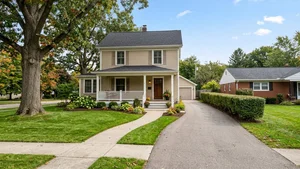
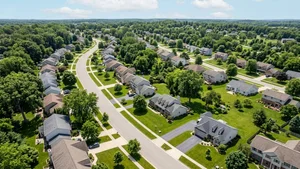
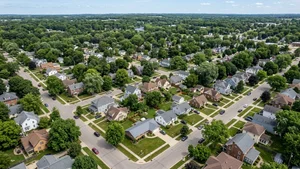
The median home price in Caledonia currently sits between $450,000 and $535,000, presenting a substantial financial hurdle for many buyers entering the market in 2026. Gathering a 20% down payment on a half-million-dollar property requires saving upwards of $100,000, which can delay purchases by several years.
Buyers looking to reduce their out-of-pocket costs at closing can explore local and state financial aid. These funds help cover down payments and closing costs, making homeownership more accessible for those purchasing a primary residence.
State and County Financial Aid Options
Buyers in Kent County have access to a mix of statewide initiatives and local consortium funds. These programs provide upfront capital to reduce the amount of cash required on closing day.
To access these funds, buyers must work with an approved participating lender who handles the application alongside the primary mortgage. Some of these local grants can be combined with state-level assistance to cover both the down payment and the closing costs on a single transaction.
MSHDA Loans and Down Payment Funds
The Michigan State Housing Development Authority (MSHDA) offers the MI Home Loan program, which pairs a primary mortgage with down payment assistance. Standard applicants can receive up to $10,000 toward their purchase.
MSHDA recently introduced a specialized first-generation homebuyer program that increases the available assistance to $25,000. Buyers using MSHDA funds in 2026 must adhere to a statewide sales price limit of $224,500.
Kent County Grants and Matched Savings
Properties located outside the Grand Rapids city limits, including those in Caledonia, fall under the jurisdiction of the Kent HOME Consortium. This organization distributes federal housing funds to low-to-moderate-income buyers purchasing a home in the county.
Buyers should also look into the Individual Development Account (IDA) offered through ICCF Community Homes. This matched savings program requires participants to save $1,000, which the organization then matches with a $4,000 grant for down payment and closing costs.
USDA Rural Development Loans
Despite ongoing residential development, large portions of the 49316 zip code still fall within designated rural boundaries. This geographic classification allows buyers to apply for USDA Rural Development loans, which offer zero-down financing.
The USDA program enforces maximum household income limits based on the size of the family. For 2026, the income limit for a one-to-four-person household in this area is approximately $119,850.
Who Qualifies for These Programs
Eligibility comes down to household income, credit history, and the home's purchase price. Lenders review your financial profile during the pre-approval stage to determine which specific grants or loans fit your situation.
Each organization sets its own baseline requirements, but most state and county funds share a similar set of underwriting rules. Buyers must meet the following general standards to participate:
Credit Score: Most MSHDA programs require a minimum credit score of 640.
First-Time Status: Michigan defines a first-time homebuyer as someone who has not owned a principal residence in the past three years.
Education: Applicants must complete a HUD-approved homebuyer education counseling course before closing.
Owner-Occupancy: The property must serve as the buyer's primary residence, meaning investment properties and second homes do not qualify.
Caledonia Real Estate Market Overview
Home prices in Caledonia have maintained an upward trajectory, with early 2026 data showing median values ranging from $450,000 to $535,000. This pricing reflects the area's ongoing residential expansion and the steady demand for housing in southeastern Kent County.
The local inventory consists primarily of established single-family homes and new construction developments. Buyers looking in the lower price tiers often face competition, as properties priced under $350,000 sell quickly when they hit the market.
Finding a home that fits under the $224,500 MSHDA purchase price limit requires patience and flexibility. Buyers should monitor the market closely and act fast when smaller, older homes or attached properties become available.
Local Features and Everyday Amenities
Caledonia sits along the M-37 corridor, also known as Broadmoor Avenue, which serves as the primary route for commuters heading north into Grand Rapids. The drive typically takes about 20 to 25 minutes, depending on traffic patterns near the Gerald R. Ford International Airport.
The Caledonia Community Schools district covers a large geographic footprint, extending into portions of Gaines and Bowne townships. Residents have access to local municipal services, including the Caledonia branch of the Kent District Library, nearby healthcare clinics, and regional grocery chains.
Outdoor recreation centers around the Paul Henry Thornapple Trail, a paved path used for walking and biking that runs through the middle of the village. Caledonia Lakeside Park provides additional green space, athletic fields, and access to Emmons Lake.
Frequently Asked Questions
Can the $10,000 or $25,000 grant be combined with other assistance programs?
Yes, buyers can often stack state-level MSHDA funds with local county grants to maximize their purchasing power. A participating loan officer will review your file to ensure the combined funds do not exceed the total allowed closing costs and down payment requirements.
Who qualifies as a first-time homebuyer in Michigan?
The state considers you a first-time homebuyer if you have not had an ownership interest in a primary residence during the previous three years. This means previous homeowners who have rented since 2022 could be eligible for these funds again in 2026.
How do I know if I meet the income requirements for Caledonia?
Income limits depend entirely on the specific program you choose and the number of people living in your home. While the USDA caps a four-person household at around $119,850, MSHDA and Kent County grants use different area median income calculations that your lender will verify.