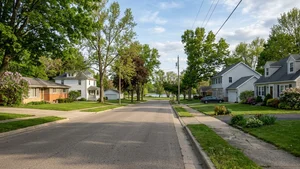
The median home sale price in the Hastings housing market sits around $252,000 for the 49058 ZIP code as of early 2026. That's the number most buyers focus on - but it's not the whole story. In any community governed by a homeowners association, your actual monthly housing cost includes dues that affect your debt-to-income ratio and your real affordability ceiling.
Whether you're looking at a house on Algonquin Lake or a newer subdivision in Barry County, association costs vary widely based on how the community is structured. Knowing what dues cost, how often they're billed, and what they actually fund will keep your budget honest.
Typical HOA Fee Costs in Hastings
Association dues in Hastings span a genuinely wide range, and that range reflects how different these communities are from one another. Basic road or lot associations show up in listings at as little as $8 to $13 per month - that's not a typo, and it reflects simple shared infrastructure with nothing extra attached. On the other end, communities with real shared amenities charge real money. The Algonquin Lake Community Association, for instance, reports a median fee of around $236 per month. Fees scale with what the association actually does, which sounds obvious until you're comparing two listings and wondering why one costs twenty times more per month than the other.
Comparing Hastings to the Grand Rapids Metro
For context, the nearby Grand Rapids metro area runs between $200 and $400 per month in communities that offer pools, fitness centers, and landscaping services. Census-based data for Kent County puts the median monthly condo and HOA fee at $281. Against those figures, Hastings - particularly its smaller subdivisions maintaining only private roads - tends to come in on the more affordable side.
What Drives Costs Up or Down
The amenity package is the main driver. Private parks, waterfront access, and community buildings all require ongoing funding for upkeep and insurance, and that cost lands in your monthly dues.
Community type matters too. Condominium developments consistently carry higher dues than single-family subdivisions because the association owns the exterior - that means exterior maintenance, roof replacements, and everything in between comes out of the shared budget, not your personal checkbook.
Billing Frequency for Association Dues
Monthly budgeting is intuitive, but not every association collects monthly. Plenty of single-family subdivisions in Barry County bill annually - one payment, once a year. Smaller neighborhoods run by volunteer boards often prefer it that way because it cuts down on administrative work.
Larger associations and condo communities with substantial operating budgets typically require monthly payments. Quarterly billing exists too, splitting the difference. It's worth confirming the billing schedule early in your search, because planning for an annual lump sum is a different exercise than factoring in a monthly line item.
Services and Expenses Covered by Your Dues
In much of Hastings and the surrounding area, the core reason an association exists is practical: private road maintenance and winter snow removal. Municipal services don't cover private roads, so neighbors pool resources to keep them clear and paved. That's the baseline.
Beyond day-to-day maintenance, a portion of dues funds the association's reserve account - essentially a savings fund for long-term capital repairs. Repaving a shared parking lot, fixing a community dock, replacing aging infrastructure: all of that comes from reserves. A well-funded reserve protects you from getting hit with a large unexpected bill when something wears out.
What Associations Typically Exclude
Even in a community with generous services, certain costs stay with you. Single-family HOA dues don't cover property taxes, your personal homeowners insurance, or anything inside your home. Utilities - water, gas, electricity - are yours as well.
Read the governing documents carefully. The line between what the association maintains and what you maintain isn't always where buyers assume it is.
How to Tell if an HOA Fee is Too High
The dollar amount alone doesn't tell you much. A $300 monthly fee that covers exterior maintenance, lawn care, snow removal, and trash service can be a reasonable deal. A $100 monthly fee for a community with no amenities and deteriorating private roads is not.
The more telling signal is the fee history. Dues that jump steeply year after year often point to poor financial management or a reserve fund that's been running short for a while. Review the association's budget and look at what the fees are actually covering before you decide whether the number is fair.
Questions to Ask Before Buying
Request the most recent reserve study. That document maps out the expected lifespan of shared assets and shows whether the community has saved enough to replace them on schedule - or whether they're behind.
Ask the board directly whether any special assessments are under discussion. You don't want to close on a home and find out two months later that the board has been quietly planning a major project with no reserves to fund it.
Additional Association Costs Beyond Regular Dues
Regular dues get most of the attention, but closings often come with one-time fees that catch buyers off guard. Many management companies charge an HOA transfer fee to update ownership records when a property changes hands - that's an administrative cost paid at closing, not something you'll see in the monthly budget.
Some communities also require a capital contribution or initiation fee from new buyers. This upfront payment, which can equal a few months of regular dues, goes straight into the reserve fund.
Handling Special Assessments
When a major expense hits and the reserves aren't there to cover it, the board can levy a special assessment - a mandatory charge billed to all homeowners to close the gap. These range from a few hundred dollars for an unexpected landscaping repair to several thousand for something like a new community roof.
Board meeting minutes are your best early-warning system. If the community is already talking about a large project, it'll usually show up there before it shows up on your statement.
Frequently Asked Questions
How much are typical HOA fees for subdivisions in Hastings, MI?
Fees range widely depending on the community's amenities. Basic lot associations can cost as little as $8 to $13 per month, while neighborhoods with more features, like the Algonquin Lake Community Association, have a median fee around $236 per month.
Do Hastings HOA fees usually cover winter snow removal and private road maintenance?
Yes, for many subdivisions in the area, maintaining private roads and clearing winter snow are the primary reasons the association exists. Communities that don't rely on municipal street services pool their dues to cover these specific costs.
How can I find homes for sale in Hastings, MI that don't have a homeowners association?
You can instruct your real estate agent to filter MLS listings to exclude properties governed by an association. Many older neighborhoods near downtown Hastings and rural parcels in Barry County don't have formal HOAs.
At what point in the buying process do I get to review the HOA bylaws and fee schedule?
Buyers typically receive the governing documents, financial statements, and fee schedules shortly after signing a purchase agreement. The contract usually includes a contingency period allowing you to review these documents and cancel the sale if the terms are unacceptable.
Can a Hastings homeowners association charge surprise special assessments on top of my regular dues?
Yes, if the community faces a major unexpected expense or has underfunded reserves, the board can levy a special assessment. Reviewing the association's reserve study before closing helps identify the risk of these additional charges.
Are HOA fees generally higher for waterfront properties on the lakes surrounding Hastings?
Yes, properties in waterfront communities often see higher dues because the association must maintain shared infrastructure like docks, seawalls, or private beaches. The Algonquin Lake Community Association's median fee of $236 per month is higher than what you'd typically see in basic landlocked subdivisions.