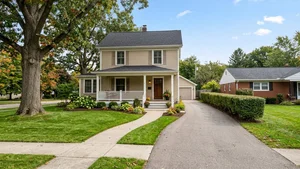
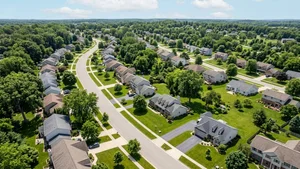
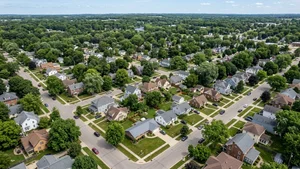
Median home values in Hastings, MI sit between $238,000 and $265,000 as of early 2026. While this price point remains accessible compared to larger Michigan metros, coming up with the cash for closing presents a major hurdle for many buyers. Saving thousands of dollars takes time, especially while managing current rental costs.
Interest rates remain a primary focus for buyers in 2026, making upfront financial help even more valuable. Securing a down payment grant or a zero-down loan changes the math on your monthly budget. Barry County offers multiple avenues for financial help to ease this burden.
Buyers can access state-level funds, federal rural development loans, and local community resources. These options reduce the amount of cash you need on closing day. Finding the right fit comes down to your household income, your credit score, and the type of property you want to buy.
State and Local Financial Help for Hastings Buyers
The Michigan State Housing Development Authority (MSHDA) provides the bulk of the down payment support available in Barry County. These state-level programs operate through approved local lenders rather than direct applications to the government. You work with a loan officer who handles the paperwork on your behalf.
Not every bank offers these specialized loans, so you should interview lenders about their experience with state grants. A local loan officer familiar with Barry County can speed up the underwriting timeline. They will structure the primary mortgage and the assistance program as a single package before closing.
Because Hastings falls outside major urban centers, the entire area qualifies for federal rural development loans. The United States Department of Agriculture (USDA) guarantees these mortgages to encourage homeownership in smaller communities. This federal backing allows lenders to offer favorable terms to local buyers.
Specific Loan and Down Payment Structures
Down payment assistance rarely arrives as a direct cash grant. Most state programs issue the funds as a silent second mortgage with zero percent interest and no monthly payments. This secondary lien sits quietly behind your main mortgage.
You only repay this second mortgage when you sell the property, refinance the primary loan, or pay off the house entirely. MSHDA programs require buyers to contribute a minimum of one percent of the purchase price from their own funds. For a $250,000 home, this means you need at least $2,500 of your own money in the transaction.
This required contribution can come from your savings or a verified gift from a relative. Buyers exploring Homebuyer Assistance Programs in Hastings, MI typically use one of three main structures:
MI 10K DPA Loan: This program provides up to $10,000 to cover down payment and closing costs. It pairs with MSHDA standard first mortgages and requires a standard credit review.
First-Generation Down Payment Assistance: Buyers whose parents did not own a home can access up to $25,000. This state initiative aims to build wealth for individuals without a family history of homeownership.
USDA Rural Development Loans: This federal program offers zero percent down payment options for properties in eligible rural areas like Hastings. Buyers finance 100 percent of the purchase price, removing the need for upfront equity.
Who Qualifies for These Funds
Eligibility comes down to credit history, household income, and the final purchase price of the home. MSHDA requires a minimum credit score of 640 for all borrowers on the loan application. Lenders will pull your credit report early in the process to verify you meet this baseline.
The state enforces a sales price limit of $544,233 for 2026. Given the current median prices in Hastings, most local properties easily fall under this cap. Buyers looking at luxury properties or large estates will exceed this threshold.
Income limits vary based on household size and the specific program you choose. Lenders calculate the total income of all adults planning to live in the home, not just the individuals listed on the mortgage. You must provide two years of tax returns and recent pay stubs to confirm your earnings.
Underwriters also look at your debt-to-income ratio to ensure you can afford the monthly payments. Paying down credit cards or auto loans before applying improves your chances of approval.
Required Classes and Community Resources
Applicants must complete a certified homebuyer education course before closing on a home with MSHDA funds. This requirement ensures buyers understand the responsibilities of homeownership and the terms of their mortgage. The certificate of completion goes directly to your lender.
The curriculum covers budgeting, home maintenance, and the closing process. You can find approved classes through the MSHDA Housing Education Locator. Many of these courses are available online, though some local agencies in Barry County host in-person sessions.
Taking the class early in your search prevents delays when you finally find a house. Buyers looking for additional support can explore the Barry County Housing Fund. Local organizations sometimes offer supplemental counseling or emergency repair grants for new homeowners.
Eligible Property Types and Current Market Prices
Standard single-family homes and condominiums meet the property guidelines for most state and federal assistance. The home must serve as your primary residence, meaning you cannot use these funds for investment properties or vacation rentals. You are required to move in shortly after closing.
Appraisers will check the home for safety and structural issues before the lender approves the funds. Homes with peeling paint, damaged roofs, or faulty wiring may not pass a USDA or FHA appraisal. Buyers interested in manufactured homes face different underwriting rules.
USDA loans and MSHDA programs restrict funding for manufactured housing based on the foundation type and the year the home was built. You should verify the property classification before paying for an inspection.
With Hastings home prices hovering around $250,000, buyers using a $10,000 assistance loan can cover a large portion of a standard FHA down payment. A three-and-a-half percent down payment on a $250,000 house equals $8,750. The state assistance covers that entire amount, leaving the remaining funds to offset your closing costs.
Commute Routes and Community Features
Hastings serves as the county seat of Barry County, offering a local economy separate from Grand Rapids or Kalamazoo. Most residents rely on state highways for regional travel rather than interstate freeways. The central location makes it a practical base for commuters heading in multiple directions.
Driving to Grand Rapids takes about forty-five minutes under normal traffic conditions. The commute to Kalamazoo takes a similar amount of time, giving residents employment options in two major markets. The city maintains several public spaces, including Fish Hatchery Park and Tyden Park along the Thornapple River.
Residents in the area utilize the Hastings Area School System facilities spread throughout the city limits. These municipal features factor into the overall property values in the area.
M-37 Access: This state highway runs directly through Hastings, providing a straight route north to Grand Rapids or south to Battle Creek. Commuters use this as their primary north-south artery.
M-43 Connections: Residents use this route to travel west toward Kalamazoo or east toward Lansing. It intersects with M-37 right in the center of town.
Local Parks: Tyden Park features riverfront walking paths, while Fish Hatchery Park offers sports fields and picnic pavilions. Both locations offer public access to the Thornapple River.
School Facilities: The Hastings Area School System operates a central high school, a middle school, and several elementary buildings. These campuses sit within a short drive of most residential neighborhoods in the city.
Frequently Asked Questions
What is the $10K first-time homebuyer program in Michigan?
The MI 10K DPA is a state-funded loan that gives buyers up to $10,000 for upfront closing expenses. It operates as a silent second mortgage, meaning it accrues zero interest and requires no monthly payments. You simply pay the principal balance back when you sell the Hastings property or refinance your primary loan.
Who qualifies as a first-time homebuyer in Michigan?
The state defines a first-time buyer as anyone who has not held an ownership interest in a primary residence during the past three years. If you owned a home in 2021 but rented an apartment since 2022, you meet the requirement for 2026. Certain targeted areas across Michigan waive this three-year rule entirely, though you must check the latest state maps to verify eligible zones.