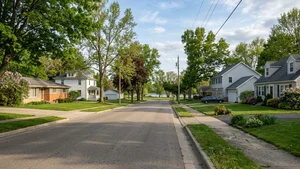
The median home price in Byron Center, MI sits around $610,000 right now, with available listings selling in roughly 6 days. For anyone currently living in Byron Center who is looking to sell a larger family home and move into senior housing, that's a meaningful advantage - you're working with a strong seller's market, which gives you real leverage to maximize equity before making the transition.
Finding the right retirement community here comes down to knowing what this area actually offers. Byron Center is a township, not a resort-style master-planned development, so you'll find a mix of independent living facilities, assisted living centers, and senior apartments rather than sprawling age-restricted subdivisions. What works for you depends on your budget, the amenities you care about, and how your care needs might shift over the next several years.
55+ and Senior Living Options in Byron Center at a Glance
Byron Center doesn't currently have large, age-restricted luxury 55+ subdivisions where you'd purchase a single-family home. The local senior housing market is built around independent living communities, assisted living, and senior apartments. The Oaks at Byron Center and Byron Manor are the two primary options for older adults in the immediate area.
These facilities operate under age guidelines set by federal and state law. Before you tour anything, it's worth clarifying whether a given property requires all residents to meet an age threshold or whether it follows a more flexible occupancy model.
Types of Communities in Byron Center
Most of what you'll find here falls into the independent living or assisted living category - not 55+ mobile home communities or large active-adult neighborhoods. Independent living means a private apartment with communal dining and organized activities; assisted living adds daily personal care on top of that.
If owning a home in an age-restricted neighborhood is the goal, you'll likely need to look beyond Byron Center into the broader Grand Rapids metro. Within the township itself, renting an apartment in a dedicated senior complex is the most common path.
Who Qualifies Under the 80/20 Age Rule
Many age-restricted communities operate under the Housing for Older Persons Act (HOPA), which includes the 80/20 rule. That rule requires at least 80% of occupied units to house at least one person who is 55 or older.
The remaining 20% of units can technically be rented or sold to younger residents, though individual communities often set stricter internal policies than the law requires. Always ask the property manager for their specific age requirements before you apply.
Types of Senior Living in the Area
General apartment rent in Byron Center runs between $1,319 and $1,324 per month. Dedicated senior housing is a different conversation - costs vary significantly depending on the level of care and what's bundled into the monthly fee.
Knowing the difference between each tier matters before you start comparing price tags.
Active-Adult and Independent Living
Independent senior living in Byron Center, MI is designed for adults who manage their own daily routines but want to be free of home maintenance. These communities typically provide a private apartment, exterior upkeep, snow removal, and access to social events - usually rolled into a single monthly fee that covers rent, utilities, and sometimes meals.
It's a popular choice for people who want to downsize without stepping into a medical setting.
Assisted Living and Continuing Care
Assisted living adds a meaningful layer of support - help with medication management, bathing, and dressing, with staff available around the clock. A continuing care retirement community (CCRC) takes that further by combining independent living, assisted living, and skilled nursing on one campus. The appeal is that you can move between levels of care as your needs change without relocating to an entirely different facility.
Senior Apartments and Mobile-Home Communities
Standard senior apartments function like traditional rentals but are restricted to older adults. They don't typically include meals or personal care, which makes them the more budget-friendly option for independent retirees who don't need additional services.
55+ mobile home communities do exist in the wider Kent County area, but they're rare within Byron Center's township limits. If affordable manufactured housing is the priority, neighboring towns in the Grand Rapids metro are worth a look.
Local Communities to Consider
The Oaks at Byron Center stands out as one of the primary independent living communities in the township, offering structured amenities including dining, housekeeping, and scheduled transportation. Byron Manor provides another local option for those who want a supportive environment without leaving the immediate area.
Because dedicated 55+ communities in Byron Center, MI are limited in number, these two facilities absorb much of the local demand.
Independent Living Options
The Oaks at Byron Center operates as a senior living community rather than a traditional age-restricted subdivision. Residents have private units and access to shared amenities and organized social programming. When you're evaluating a place to live like this, ask to see the specific floor plans - most of these properties offer studios, one-bedroom, and two-bedroom layouts to fit different budgets.
Renting vs. Buying in Kent County
Because Byron Center doesn't have large-scale age-restricted subdivisions, most local senior living options involve renting an apartment or paying a monthly fee to a care facility. If homeownership matters to you, your realistic options are standard single-family neighborhoods or townhome developments with HOAs that handle lawn care.
With the local median home price at roughly $610,000, selling a current property can comfortably fund a move into a maintenance-free rental or independent living community. Renting gives you flexibility; buying keeps your equity tied to the local real estate market. Neither is wrong - it just depends on what you're optimizing for.
What Does Senior Living Cost in Byron Center?
Senior independent-living communities in this area average about $3,715 per month. At The Oaks at Byron Center specifically, monthly rates start between roughly $3,269 and $4,259 depending on the unit type and services you select.
That's a noticeable jump from a standard apartment rental, but those fees typically bundle meals, housekeeping, and utilities. Factor that in before you compare numbers side by side - you're not comparing like for like otherwise.
Rent and Independent Living Costs
The base rent for a senior apartment covers the physical space, but the total cost depends on the care tier. Independent living fees run lower than assisted living rates because they don't include personal medical care.
If you're searching for affordable or low income senior housing in Byron Center, MI, you'll need to contact individual properties directly about income-restricted units or state subsidy programs. Waitlists for subsidized housing can be lengthy.
HOA Dues and Entrance Fees
General homeowner association fees in Michigan average about $210 per month, though the range is wide depending on the neighborhood. In local amenity-rich townhome communities that handle snow removal and lawn care, expect HOA dues in the low hundreds of dollars per month.
CCRCs typically require a substantial upfront entrance fee on top of monthly rent. That fee secures your spot in the community and guarantees access to higher levels of care if your health declines.
Does Medicare Help Pay in Michigan?
Medicare does not cover room and board in independent or assisted living facilities in Michigan. It's built to pay for short-term skilled nursing care, doctor visits, and hospital stays - not housing.
Medicaid may provide some financial assistance for assisted living through specific waiver programs, but only for individuals who meet strict income and asset limits. Most residents fund senior living through private savings, long-term care insurance, or proceeds from selling a home.
Is Byron Center, MI a Good Fit for Your Retirement?
Byron Center's overall cost of living registers at 105, sitting slightly above the national average of 100. That 5% premium is driven primarily by local housing costs - not unusual for a desirable suburb of Grand Rapids.
Cost of Living Considerations
Outside of housing, everyday expenses like groceries and utilities remain relatively stable. Downsizing from a large, high-maintenance property into a smaller townhome or senior apartment can help offset those housing costs meaningfully.
Property taxes are part of the equation too. If you're buying a standard home rather than renting in a senior facility, calculate your expected annual tax burden based on the township's current millage rates before you commit.
Healthcare Access and Local Amenities
The nearest major hospital is University of Michigan Health-West, located about 3.1 miles away in the city of Wyoming, MI - a 208-bed Level II trauma center with comprehensive emergency and specialized care.
Corewell Health Blodgett Hospital and Corewell Health Butterworth Hospital are both within about 11 miles in Grand Rapids. For older adults, that kind of tight healthcare network matters - you're not driving an hour for a specialist.
Pros and Cons of Age-Restricted Communities
With only about 32 homes currently in active inventory across Byron Center, finding the right downsized property takes patience. Moving into a dedicated senior living community sidesteps that tight inventory entirely, which is worth something on its own.
That said, transitioning to an age-restricted environment is a real lifestyle shift. The convenience of bundled services comes with tradeoffs, and it's worth being clear-eyed about both sides.
Benefits of 55+ Living
The most obvious advantage is the end of home maintenance. No roof replacements, no lawn mowing, no shoveling Michigan snow. That alone is a meaningful quality-of-life change for a lot of people.
These communities also hand you a ready-made social network. Communal dining, organized activities, and shared spaces make it much easier to stay connected - and that matters more than people often expect going in.
Common Downsides and Alternatives
The ongoing cost is the biggest sticking point for most people, particularly since Medicare won't cover rent or basic assisted living fees. Monthly rates of $3,700 or more can draw down retirement savings faster than staying in a paid-off home.
Some retirees also find they miss the energy of a neighborhood with young families and kids around. If a formal senior community feels too structured, buying a low-maintenance condo in a standard Byron Center subdivision is worth considering as an alternative.
How to Choose and Tour a Community
Local homes are currently selling at roughly 99.7% of list price, which means sellers have strong leverage. If you're planning to fund your move to senior living by selling your current house, you're in a good position to make that transition cleanly.
Once you know your budget, the next step is getting in front of the actual properties. A brochure won't tell you what a community actually feels like day-to-day.
Questions to Ask
Ask for a detailed breakdown of what the monthly fee covers and what costs extra. Then ask about the frequency of rent increases and the historical average of those increases over the past five years - that number tends to surprise people.
In assisted living environments, ask about the staff-to-resident ratio. Knowing the exact level of care provided upfront is how you avoid unexpected fees down the road.
Booking a Tour
Schedule your visits during active parts of the day - lunch or a mid-morning activity session. You'll get a much more accurate read on the community's energy than you would during a quiet Tuesday afternoon.
Pay attention to the cleanliness of the common areas and the overall condition of the building. A well-maintained facility is usually a sign of responsive management.
Frequently Asked Questions
How much are the average monthly HOA fees for 55+ communities in Byron Center, MI?
No specific HOA data exists for age-restricted 55+ communities in Byron Center. General Michigan HOA fees average about $210 per month. In local amenity-rich townhome communities that handle lawn care and snow removal, expect to pay in the low hundreds of dollars monthly.
Can I buy a home in a Byron Center retirement community if my spouse is under 55?
It depends on the specific community's rules. Under the 80/20 rule of the Housing for Older Persons Act, 80% of units must have at least one resident who is 55 or older, which often allows a younger spouse to live there. Check with the property manager to confirm their internal policies.
Are grandchildren or pets allowed to live with me in Byron Center senior living neighborhoods?
Grandchildren generally can't live with you full-time in an age-restricted community, though short-term visits are usually welcome. Pets are often allowed in independent living facilities like The Oaks at Byron Center, but size and breed restrictions typically apply.
How long are the waitlists to get into the most popular independent living communities in Byron Center?
Waitlists vary by facility and unit type. Popular independent living communities may have waitlists of several months for specific floor plans, while other units might be available immediately. Contact local facilities directly for current availability.
What is the difference between buying a 55+ condo and moving into a continuing care retirement community in the Byron Center area?
Buying a 55+ condo means you own the real estate and pay monthly HOA dues, but you're responsible for your own medical care. Moving into a continuing care retirement community (CCRC) usually involves paying an entrance fee and a monthly rate that guarantees access to assisted living and skilled nursing as your health needs change.
Do residents of Byron Center retirement communities still have to pay standard Kent County property taxes?
Yes, if you buy and own a home or condo in an age-restricted community, you pay standard local property taxes. If you rent an apartment in an independent or assisted living facility, the property taxes are paid by the building owner and factored into your monthly rent.