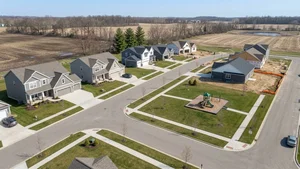
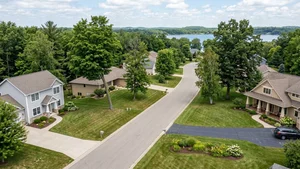
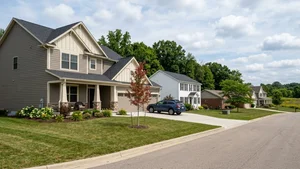
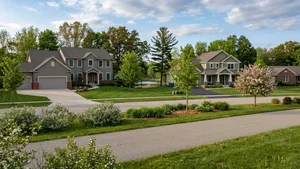
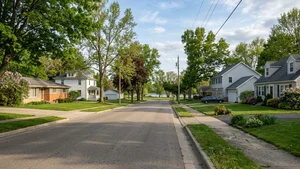
Byron Center, MI sits about 14 miles south of downtown Grand Rapids, and right now it's one of the faster-moving markets in the region. Homes are selling in a median of six days, and median sale prices are hovering around $610,000. If you've been watching this area, you already know inventory doesn't stick around for those planning on living in Byron Center, MI.
What a lot of buyers don't realize is how much history sits underneath all those newer subdivisions. This community started as an 1830s farming settlement, and that backstory shapes everything from the lot sizes you'll find on the outskirts to the tight-knit identity the place still carries today.
A Quick Look at Byron Center's Past
Byron Township was established in 1836, which makes it one of the older settled communities in the Grand Rapids orbit. That 19th-century foundation is still visible if you know where to look, even as newer residential developments fill in around it.
One thing worth clarifying upfront: Byron Center isn't an incorporated city. It's an unincorporated community and census-designated place - the geographic and commercial center of Byron Township, but not a standalone municipality. That distinction matters for how local services and governance work. The area draws a notable concentration of telecommuting professionals, artists, and designers, which is a long way from its origins as a rural logging and farming outpost.
Fast Facts About the Community
There are currently about 32 active listings in this market - tight by any measure. With roughly 3.2 months of housing supply, sellers are routinely closing at nearly 100% of asking price. You'll find a mix of newer suburban builds and older properties closer to the historic center, but either way, you're not going to have weeks to think it over.
Byron Center Location and County Details
Byron Center falls entirely within Kent County, Michigan. That 14-mile distance from Grand Rapids is close enough for a daily commute, far enough to feel like you've left the city behind.
Because it sits within the broader Grand Rapids metropolitan area, residents have real access to urban employment centers without giving up the suburban feel. Byron Center Public Schools operates under that same regional umbrella. The most recent tracking period shows 10 homes sold in this specific pocket of Kent County - steady volume for a community this size.
Is Byron Center in Multiple Counties?
No. The community and Byron Township are strictly within Kent County. Buyers here pay Kent County property taxes and use local municipal services - no county-line complications to sort out.
How Byron Center Got Its Name
The "Byron" traces back to the English poet Lord Byron. The Michigan Legislature platted and named the township in the 1830s, during a period when naming places after literary figures was genuinely fashionable.
The "Center" part came later, and it's exactly as literal as it sounds. When the first post office was established, it landed at the intersection of Byron Center Avenue SW and 84th Street - the geographic and commercial middle of activity in Byron Township. The settlement that grew around that post office became Byron Center, and that original intersection still anchors the community's local businesses and daily traffic today.
The Meaning Behind the Location
There's no mystery to the name. It describes the central hub of the township, not a separate municipal entity. That intersection remains a focal point - which is worth understanding if you're trying to get a feel for how the community is laid out.
The Founding and Growth of Byron Center
The first settlers arrived in 1835. Nathan Boynton claimed a farm in section 5, establishing the area's agricultural footing. His brothers, Jeremiah and William Boynton, followed in 1836, settling in sections 8 and 9 - the same year the state legislature officially established Byron Township.
Growth continued through the mid-1840s and early 1850s. Names that show up in the early record include Josiah R. Holden, Bradley Weaver, Daniel Prindle, and William Davidson - the people who turned a handful of farm claims into an actual community.
From Agriculture to Modern Suburb
For a long stretch, this area ran on farming and logging. The shift came as Grand Rapids expanded outward through the 20th century, and Byron Center gradually became what it is now: a residential community built around newer housing developments and retail centers. The transition wasn't overnight, but the trajectory has been consistent.
Historic Landmarks and Museums
The most prominent historic structure in Byron Center is the old Township Hall, built in 1876. It's a designated State Historical Landmark, and it's the most tangible link to the community's early civic life.
The Byron Center Historical Society acquired the building in 1986 and converted it into a museum and local genealogy archive. It operates today as the Byron Area Historic Museum, which was originally established in 1978.
Inside the Byron Area Historic Museum
The museum includes a replica general store, post office, and doctor's office - the kind of exhibits that give you an actual sense of daily life in a 19th-century township rather than just a wall of old photographs. There's also a period house and a one-room schoolhouse on display, along with exhibits covering the area's farming and logging history and local veterans. If you're new to the area or just curious about what came before the subdivisions, it's worth an afternoon.
What Byron Center is Known For Today
Byron Center has a reputation as a fast-growing suburb with top-rated schools. It pulls in local commuters and remote workers in roughly equal measure - people who want space and quiet without a long drive to Grand Rapids when they need it.
The community carries an unusually high concentration of designers, media workers, and tech professionals relative to most U.S. towns. That demographic shift reflects how thoroughly the area has modernized, and it's a big part of why housing demand stays strong.
The numbers back that up. Homes selling in six days and inventory sitting at about 32 listings doesn't leave much room for hesitation.
Local Specialties and Appeal
The agricultural past is gone in any practical sense, but the spacious suburban feel it left behind isn't. Parks, larger lots on the outskirts, room to breathe - that's what buyers are responding to. Combine that with strong public schools and steady regional growth, and you have a market that has held its value consistently.
Common Questions About Byron Center Real Estate and History
When were the major residential neighborhoods in Byron Center, MI developed?
It depends on the neighborhood. Byron Township was established in 1836 and still has some historic farm properties, but most of the current housing stock is newer suburban development that came as the Grand Rapids area expanded outward.
Are there historic districts in Byron Center that restrict how I can renovate or update my home?
No major residential historic districts with strict renovation rules apply to the general housing market here. Individual properties like the 1876 Township Hall carry State Historical Landmark designation, but that's a different situation than a neighborhood-wide historic district.
How does Byron Center's agricultural history impact current land availability and lot sizes for buyers?
The farming and logging roots mean you can still find older properties with larger lot sizes on the outskirts of town. That said, with only about 32 homes currently on the market, available land for new builds is competitive - don't assume the rural history translates to easy pickings.
What specific issues should buyers look out for when purchasing an original historic farmhouse in the Byron Center area?
Outdated plumbing, electrical systems, and foundation wear are the main concerns. The earliest settlers arrived in the 1830s and 1840s, so any surviving older homes need thorough modern inspections - not a cursory walkthrough.
Are there local tax incentives or grants available for restoring historic properties in Byron Township?
It depends on what state and county programs are available at the time of your purchase. Talk directly with Kent County officials to find out whether your specific property qualifies for anything.
How has the historical development of the M-6 highway corridor affected property zoning and home values in Byron Center?
Highway access made the commute to Grand Rapids significantly easier, which pushed buyer demand up for the area. That demand is reflected in where the market sits now - homes selling in a median of six days isn't a coincidence.