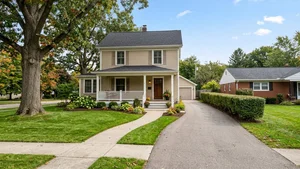
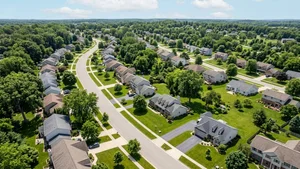
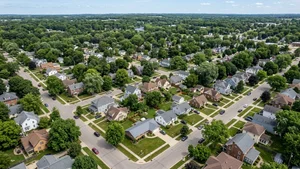
The median home price in Byron Center, MI sits around $503,000 as of May 2026. Sellers in this part of Kent County are seeing a steady flow of buyers looking for properties near the US-131 corridor. With steady demand, homeowners have an opportunity to secure strong returns if they approach the market strategically.
Homeowners generally choose between two distinct paths when listing a property. You can list on the open market with a real estate agent to maximize your final sale price. Alternatively, you can sell your house fast to a cash house buyer to skip repairs and open houses.
Each route requires a different preparation strategy and timeline. Understanding the current local data helps sellers decide which approach aligns with their timeline and financial goals.
What the Byron Center Market Looks Like Right Now
Currently, single-family homes in the area spend an average of 71 days on the market. Active inventory remains relatively low across West Michigan. Because of this limited supply, buyers are consistently watching the Multiple Listing Service (MLS) for new properties to surface.
The median price per square foot is roughly $240. This figure varies based on the age of the property and its exact location within the township. Homes closer to major retail centers or newer subdivisions often command a premium over older builds in more rural sections.
Setting the Right Asking Price
Appraisers and real estate agents use recent comparable sales to determine property value. They look at homes with similar square footage, bedroom counts, and lot sizes that have sold in the past six months. These recent sales provide a baseline for what lenders will approve for a mortgage.
Adjustments are made for specific property conditions and recent updates. A house with a 15-year-old roof will appraise differently than an identical floor plan with a brand-new roof and HVAC system. Sellers should review these comparable sales carefully before settling on a listing price.
Overpricing a property often leads to extended days on the market. Buyers have time to browse and will notice if a house sits unsold for several weeks. A properly priced home generates immediate interest and often leads to cleaner offers.
Highlighting Local Amenities and Infrastructure
Buyers look closely at commute times and local infrastructure when evaluating a property. The US-131 corridor provides a direct route to downtown Grand Rapids, MI, making the township practical for daily commuters. Highlighting this accessibility helps buyers calculate their daily driving times.
Proximity to specific local landmarks also adds concrete value to a listing. Many buyers look for homes near the Kent Trails network or Whistlestop Park for outdoor recreation access. Retail hubs like Tanger Outlets provide nearby shopping options that appeal to incoming residents.
School district boundaries are another factual detail buyers verify immediately. Properties located within the Byron Center Public Schools district should feature this information prominently in the listing description. Providing exact distances to the nearest elementary or middle school saves buyers time during their search.
Strategies for Different Property Types
The approach to selling a property changes based on its age and neighborhood structure. Established single-family homes often require minor maintenance and cosmetic updates before hitting the market. Sellers of older homes should expect buyers to request a thorough home inspection.
Newer subdivision developments, such as Providence Lake or Railside, attract buyers looking for modern floor plans. These homes typically need less immediate maintenance but face direct competition from new construction projects nearby. Marketing these properties requires emphasizing the benefits of an established yard and completed landscaping.
Condominiums and townhomes involve specific Homeowner Association (HOA) regulations. Sellers must provide the buyer with the HOA bylaws, current budget, and any special assessment details. Buyers factor the monthly HOA dues into their debt-to-income ratio during the mortgage underwriting process.
Getting Your House Ready for Showings
Preparing a house for the market involves addressing deferred maintenance and neutralizing the living spaces. A clean, uncluttered home allows buyers to focus on the square footage and floor plan. Sellers should remove excess furniture and personal items before taking listing photos.
Basic repairs go a long way in preventing delays during the inspection phase. Fixing leaky faucets, replacing burnt-out light bulbs, and servicing the furnace show buyers the home has been maintained. These small details often prevent buyers from asking for major financial concessions later.
Exterior maintenance sets the initial impression when a buyer pulls into the driveway. Power washing the siding, trimming overgrown bushes, and applying fresh mulch improve the property's appearance from the street.
Bypassing the Traditional Market with Cash Offers
Some homeowners prefer to skip the traditional listing process entirely. Selling to a cash house buyer allows you to close on a flexible timeline without scheduling open houses. This route is common for inherited properties or homes requiring substantial foundation or roof repairs.
A fair cash offer involves an investor evaluating the property in its current condition. They calculate the after-repair value of the home and subtract the estimated renovation costs. The resulting offer represents what they can pay while still covering their holding costs.
Cash sales eliminate the need for mortgage approvals and bank appraisals. The buyer purchases the property as-is, meaning the seller does not have to pay for any repairs before closing.
Closing Costs and Transfer Taxes in Kent County
Sellers are responsible for several closing costs when transferring ownership in Michigan. The largest expenses typically include real estate agent commissions and state transfer taxes. Understanding these deductions helps sellers calculate their net proceeds from the sale.
Kent County homeowners should expect to see the following standard deductions on their settlement statement:
State and County Transfer Taxes: Michigan charges a state transfer tax of $3.75 per $500 of value, while Kent County adds $0.55 per $500.
Agent Commissions: The seller generally pays the commission for both the listing agent and the buyer's agent out of the sale proceeds.
Property Tax Prorations: Sellers reimburse the buyer or receive a credit for property taxes based on the closing date and the local Principal Residence Exemption (PRE) rate, which sits around 30 to 31 mills.
Title insurance is another standard cost paid by the seller. This policy guarantees the buyer is receiving a clear title free of any unknown liens or encumbrances.
Common Questions About Selling in West Michigan
Do I have to pay taxes if I sell my house in Michigan?
Yes, sellers pay a combined state and county transfer tax totaling $4.30 per $500 of the sale price. You may also owe federal capital gains taxes if the property is an investment or if your profit exceeds the $250,000 single filer exemption limit. Consulting a local certified public accountant helps clarify your specific tax liabilities before closing.
What is the hardest month to sell a house in Michigan?
January is generally the slowest month for real estate transactions across Kent County. The cold weather and post-holiday financial recovery typically reduce the number of active buyers touring properties. Sellers listing in deep winter should expect fewer showings but often encounter motivated buyers who are relocating for work.
How do I find a trusted real estate agent to Sell My Home in Byron Center, MI?
Start by reviewing recent sale histories for agents who actively close deals in the 49315 zip code. An agent who understands the differences between neighborhoods like Railside and the rural outskirts will price your home more accurately. You should interview at least two agents to compare their marketing plans and commission rates.