Barry County offers a lower cost of living while maintaining easy access to major West Michigan employment hubs. Buyers looking for the best neighborhoods in Hastings, MI often want a balance between affordable home prices and a straightforward daily drive. The city serves as a hub between Grand Rapids, Battle Creek, and Kalamazoo.
Homebuyers will find a mix of historic properties near the city center and newer builds extending into the surrounding rural townships. The 2026 market here provides a distinct contrast to the higher-priced suburbs closer to Kent County. Knowing the layout of the local subdivisions and school boundaries helps buyers narrow down their search areas.
Current Home Prices and the Hastings Market
The median home value in Hastings sits between $238,000 and $258,000 as of mid-2026. This pricing falls well below the state average, making the area a frequent target for buyers priced out of the Grand Rapids metro. Inventory moves steadily, especially for move-in-ready properties under the $300,000 mark.
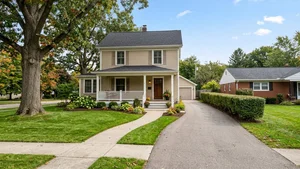
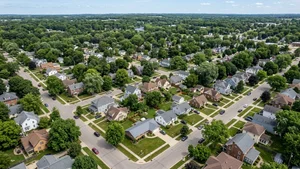
Buyers can choose from diverse housing types within a small radius. The center of town features older homes built in the late 19th and early 20th centuries on traditional city grids. Moving toward the city limits, the inventory shifts to newer subdivisions and larger lots.
Property taxes and lot sizes change quickly depending on whether a house falls inside the city limits or in the adjacent township. City residents pay for municipal services like water and sewer, while township properties typically rely on private wells and septic systems. Buyers should factor these utility differences into their monthly housing budgets.
Living in Downtown Hastings
The blocks immediately surrounding the commercial center feature some of the oldest residential architecture in Barry County. Buyers will find restored Victorian and Craftsman houses sitting on tree-lined streets. Many of these properties offer walking access to local retail shops and Thornapple River access points.
For buyers who prefer a smaller footprint, the downtown area includes loft apartments and converted industrial spaces. Properties like Tyden Lofts provide an alternative to traditional single-family homes. These units place residents right next to the local dining scene and community events.
Two major public school facilities operate within this central zone. Central Elementary School sits at 509 S Broadway, while Hastings Middle School is located at 232 W Grand St. This density of public facilities makes the downtown area a focal point for the broader community.
The North Side and Parkside Blocks
The residential blocks situated near the city's major public parks consist largely of mid-century single-family homes. Buyers focusing on this area gain immediate access to Tyden Park and Fish Hatchery Park. These green spaces offer extensive trail networks and recreational facilities maintained by the city.
Local police response data shows consistent municipal coverage for these northern blocks. The grid layout here provides straightforward routes for emergency services and daily traffic alike. Buyers reviewing local crime statistics often look closely at this quadrant of the city.
Commuters working north of Barry County frequently target this area for its logistics. Living on the north side of town provides quick access to M-37. This highway serves as the primary artery for anyone driving up toward Kent County.
East Side Developments and Township Lots
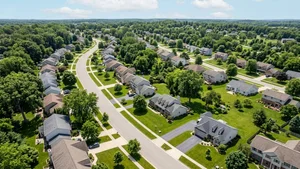
Moving east from the city center, the traditional street grid transitions into suburban-style developments and rural-suburban hybrids. Buyers will find newer subdivisions like Brookfield Acres and Creek Wood in this sector. These neighborhoods often feature homeowner associations that manage common areas and establish building guidelines.
Lot sizes expand considerably as properties cross from the city into the surrounding township. This extra space appeals to buyers who want outbuildings, large gardens, or simply more distance between neighboring houses. Zoning rules differ out here, so buyers should review local ordinances before planning any major exterior additions.
Northeastern Elementary School serves many of the students living in these eastern developments. The facility provides a local educational anchor for the surrounding subdivisions. Buyers looking at township properties should verify their exact school assignment boundaries before making an offer.
Local Public School Facilities
The Hastings Area School System covers a large geographic footprint that extends across portions of Barry and Calhoun counties. The district operates multiple buildings spread throughout the city and surrounding townships. Buyers should check the district map, as a Hastings mailing address does not automatically guarantee placement in a specific building.
Hastings High School, located at 520 W South St, serves as the main secondary facility for the entire district. The campus has seen recent updates to its physical infrastructure and athletic facilities.
Younger students attend one of four primary buildings based on their residential address. The district divides its elementary population among Central, Northeastern, Southeastern, and Star Elementary schools. Each building serves a specific geographic zone within the broader district map.
Daily Commutes to Grand Rapids and Battle Creek
Hastings functions as a central point between three major West Michigan employment centers. Most regional workers rely on two-lane state highways rather than interstate systems to reach their offices. Winter weather patterns frequently impact travel times on these open rural routes.
The drive north to Grand Rapids via M-37 typically takes 45 to 50 minutes during standard rush hour. This route carries the heaviest commuter traffic leaving Barry County each morning. Drivers heading south on M-37 to Battle Creek face a similar 45-to-50-minute commute.
Workers commuting west toward Kalamazoo use M-43. This route also averages 45 to 50 minutes under normal driving conditions. Buyers should test these routes during their actual commute hours before committing to a property purchase.
Frequently Asked Questions
Is Hastings, MI a good place to live?
Hastings offers a lower cost of living and a slower pace compared to the larger urban centers in West Michigan. Residents have access to local parks, the Thornapple River, and a traditional downtown commercial district. The 45-minute distance from major cities provides rural separation without total isolation.
Where is the trendy part of Hastings?
The downtown center serves as the main hub for local dining and community events. Developments like Tyden Lofts have introduced modern, industrial-style living spaces right in the middle of the historic district. This area appeals to buyers who want walking access to shops rather than a driving-dependent suburban layout.
What is the cost of living in Hastings compared to Grand Rapids?
Housing costs in Hastings run notably lower than in the Grand Rapids metro area. With a 2026 median home price hovering around $248,000, buyers save a substantial amount on their principal mortgage. Everyday expenses like property taxes and local services also tend to be lower in Barry County.