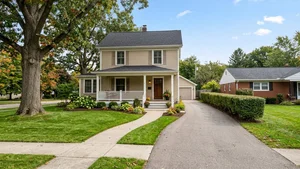
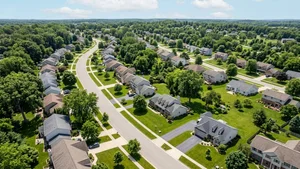
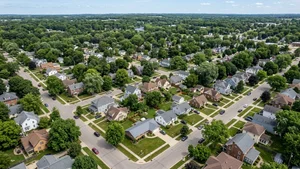
Median home prices in the 49315 zip code sit between $450,000 and $505,000 as of mid-2026. Buyers looking at Byron Center see a landscape of newer single-family homes and townhouses, driven by the township's location just south of Grand Rapids. The area continues to attract new residents due to its blend of suburban space and accessible amenities.
While the cost of housing has risen, middle-income buyers have options to make a purchase work. State and local initiatives provide down payment and closing cost funds specifically for this area. These programs help buyers manage upfront costs while taking advantage of local infrastructure like the 15-minute commute to downtown Grand Rapids via US-131, shopping at Tanger Outlets, and outdoor access along Kent Trails.
Securing a home in this area does not always require a massive cash reserve. By understanding the available funding avenues, prospective homeowners can reduce their out-of-pocket expenses and retain more of their savings for future property maintenance or upgrades.
Statewide Funding Through MSHDA
The Michigan State Housing Development Authority offers several loan options that apply directly to Byron Center real estate transactions. While MSHDA serves the entire state from Detroit to the Upper Peninsula, these specific funds are readily available for buyers looking in the 49315 zip code. For 2026, the maximum purchase price limit for these state-backed programs is $544,233.
These funds are designed to cover down payments, closing costs, and lender fees. Buyers can pair these assistance loans with a primary mortgage to reduce the amount of cash needed at the closing table.
Working with a knowledgeable loan officer ensures you maximize these state resources. They will evaluate your disposable household and per capita income to confirm you meet the state's financial thresholds before submitting an application to the creditor.
The MI 10K DPA Option
The MI 10K program provides a $10,000 loan to help buyers cover their initial costs. This is a zero-interest, non-amortizing loan, meaning it does not add to your monthly mortgage payment.
The balance becomes due only when you sell the property, transfer the title, or refinance your primary mortgage. It functions as a silent second mortgage that stays in place until the property changes hands.
This structure provides immediate relief at the closing table without straining your monthly budget. Homeowners can build equity over time without worrying about a secondary monthly payment eating into their disposable income.
The First-Generation Pilot
MSHDA also offers a First-Generation down payment pilot program that provides up to $25,000 in assistance. This option targets buyers whose parents or legal guardians have not owned a residential property in the past three years.
Like the MI 10K option, these funds help offset the upfront cash requirements of buying a house. The higher limit gives eligible buyers more purchasing power when bidding on properties in the local market.
This allows buyers to look at a wider range of single-family homes that might have otherwise required a massive out-of-pocket cash reserve.
Regional Grants for Kent County Residents
Beyond state-level loans, buyers looking in Byron Center can access regional funds designated for Kent County residents. The Inner City Christian Federation (ICCF) offers the Community Homes Individual Development Account (IDA) program. This initiative uses a matched-savings structure to help buyers build their down payment over time.
Participants save $1,000 of their own money, and the program matches it with a $4,000 grant. These funds do not have to be repaid, provided the buyer meets all program conditions.
This 4-to-1 match accelerates the saving process for families who might otherwise spend years gathering enough cash for a traditional down payment. It empowers local buyers to enter the housing market sooner.
To qualify, you must currently live in Kent County and earn below the area median income limits. For a family of four in 2026, the maximum annual household income cap for this specific grant is $106,600.
Using USDA Rural Development Loans in the 49315 Zip Code
The USDA Rural Development loan offers a zero-down-payment mortgage option for properties located in designated rural areas. While Byron Center continues to grow, certain sections outside the densest urban boundaries still qualify for this federal program. Buyers can finance 100% of the home's purchase price without paying for private mortgage insurance.
Eligibility depends on the exact address of the property. The northern parts of the township near Wyoming typically do not qualify, but neighborhoods further south or west often do. Buyers should ask their loan officer to run specific property addresses through the USDA eligibility map before making an offer.
Because the map updates periodically, property boundaries can shift. A home that qualifies today might sit just outside the boundary tomorrow, making it essential to verify the address early in your search.
The United States Department of Agriculture also enforces household income limits to ensure the program serves moderate-income buyers. Total household income cannot exceed 115% of the median income for the Grand Rapids metro area.
Who Qualifies for These Programs
Securing down payment aid requires meeting specific financial and educational benchmarks. Lenders and creditors will review your full financial profile to ensure you align with the rules of each initiative.
While each program has unique guidelines, buyers should expect to meet a standard set of baseline requirements:
Credit score minimums: Most MSHDA and regional programs require a minimum credit score of 640.
Income and household size: Approval depends on how much money you make and how many people live in the home.
Cash contribution: Buyers usually must contribute a minimum 1% cash investment toward the transaction from their own funds.
Education courses: Applicants must complete a HUD-approved homebuyer education class before closing on the house.
Owner-occupancy rules: The home must be your primary residence, as you cannot use these funds to purchase investment properties.
Meeting these baseline standards is just the beginning of the underwriting process. Completing the education course helps buyers understand the responsibilities of ownership and reduces the risk of future foreclosure.
How to Apply, Step by Step
The application process starts long before you tour your first open house. Finding the right financing partner is the first move, as not all banks participate in these specific loan programs. Buyers should locate a local loan officer who is approved to originate MSHDA or USDA loans.
Once you have a lender, enroll in a pre-purchase counseling class early in the process. Completing this HUD-approved course takes time, and finishing it upfront prevents delays when you are ready to sign a contract.
Finally, secure a full mortgage pre-approval. Having your financing fully verified and your assistance funds accounted for makes your offer stronger when bidding on homes in the local market.
With pre-approval in hand, you can confidently shop for homes within your approved price range. Sellers in the 49315 zip code respect buyers who come prepared, and having guaranteed assistance funds attached to your offer signals that you are a serious, qualified buyer.
Frequently Asked Questions
Can I combine the $25,000 First-Generation grant with the MI 10K DPA?
You cannot stack both of these MSHDA programs on the same transaction. Buyers must choose the single option that best fits their financial situation and background. Your loan officer will help calculate which program offers the most benefit for your specific purchase.
Do I have to be a first-time homebuyer to get MSHDA assistance?
Some MSHDA options are available to repeat buyers, depending on the target area and how long it has been since you last owned a home. If you have not owned a primary residence in the past three years, many programs will classify you as a first-time buyer again. Checking your history against the specific program guidelines is a smart first step.
Do I have to pay back down payment assistance in Michigan?
It depends on the structure of the funds you receive. The ICCF matching grant does not require repayment, but MSHDA's MI 10K program is a non-amortizing loan. You must pay that $10,000 back when you sell the property, transfer the title, or refinance your main mortgage.