West Michigan buyers looking southwest of Grand Rapids often narrow their search down to two prominent suburbs. Byron Center, MI and Hudsonville, MI offer fast highway access to downtown, extensive public school facilities, and a mix of established neighborhoods and new developments.
Byron Center sits in Kent County, while Hudsonville is located just across the border in Ottawa County. This geographical distinction creates differences in property taxes, municipal services, and the pace of commercial development.
Both communities have experienced steady residential growth over the past decade. By looking at 2026 home prices, neighborhood styles, and daily commute routes, buyers can determine which location aligns with their specific housing goals.
Real Estate Prices and County Tax Differences
The median home price in Byron Center sits at approximately $500,000 as of mid-2026. Buyers looking in this area will find a large concentration of new construction developments that push average sale prices upward. Custom builds and luxury properties in the township frequently exceed the $700,000 mark.
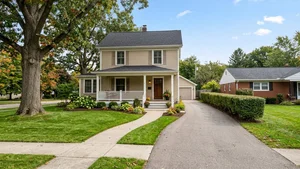
Hudsonville offers a slightly lower entry point, with median prices ranging from $335,000 to $420,000 depending on the age and style of the property. Buyers can often secure more square footage for their budget in Ottawa County compared to Kent County. Hudsonville's real estate market includes everything from accessible starter homes near the city center to large custom estates in the surrounding townships.
Property taxes are another major factor when comparing these two markets. Byron Center residents pay Kent County property taxes, which generally run higher than the rates found in Ottawa County. Hudsonville buyers benefit from Ottawa County's lower millage rates, which can lower monthly escrow payments.
Inventory types also differ between the two municipalities. Byron Center continues to see rapid subdivision expansion, meaning buyers have frequent opportunities to purchase brand-new homes. Hudsonville maintains a larger inventory of established, mid-century to late-1990s homes.
Comparing Neighborhood Layouts and Property Sizes
Hudsonville covers a large geographic footprint in Ottawa County, allowing for a wider variety of lot sizes. Buyers looking for acreage or homes with extended setbacks are more likely to find those properties here. Byron Center features a denser suburban layout, particularly near its main commercial corridors along 84th Street.
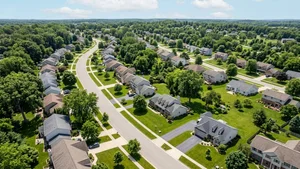
The historical development patterns of each town dictate the current housing landscape. Byron Center's recent population boom resulted in master-planned communities designed to maximize the number of homes per acre. Hudsonville's growth happened more gradually, resulting in a patchwork of traditional subdivisions mixed with remaining agricultural land.
Both communities feature active Homeowners Associations, but the style of neighborhood varies. Buyers should review HOA rules regarding exterior modifications and outbuildings before making an offer. The housing options in these two areas generally fall into a few distinct categories.
Byron Center townhomes: High-density attached housing is readily available near 84th Street and the US-131 corridor. These properties cater to buyers seeking lower-maintenance exteriors and shared community amenities.
Byron Center subdivisions: Newer single-family developments often feature smaller lot sizes to maximize neighborhood density. Many of these neighborhoods include community sidewalks, streetlights, and shared green spaces.
Hudsonville acreage: Moving further west from the city center, properties often sit on half-acre to multi-acre parcels. These homes provide more space between neighbors and fewer HOA restrictions.
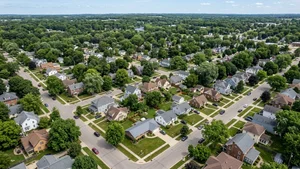
Hudsonville established subdivisions: Neighborhoods built in the 1980s and 1990s typically feature mature trees and traditional grid layouts. These areas offer quarter-acre lots with easy access to municipal parks.
Driving to Grand Rapids and Local Employment Hubs
Commuting from Byron Center into downtown Grand Rapids takes about 15 to 20 minutes during standard morning traffic. Residents primarily use US-131, which runs directly north and south through the eastern edge of the community. Access points at 84th Street and 76th Street handle the bulk of Byron Center's commuter traffic.
Hudsonville residents rely on I-196 to travel east into the city. The drive from Hudsonville to downtown Grand Rapids averages 20 to 25 minutes, depending on the exact neighborhood location and morning congestion. Commuters should factor in potential slowdowns near the I-196 and US-131 interchange during rush hour.
The M-6 highway connects both communities across the southern edge of Grand Rapids. This route allows residents to bypass downtown traffic when traveling between the eastern and western suburbs. M-6 is particularly useful for residents who work near the Gerald R. Ford International Airport.
Buyers who work in the southern suburbs, such as Wyoming or Kentwood, often find Byron Center to be the more convenient starting point. Those who commute toward Holland or the lakeshore generally prefer Hudsonville's western location.
Public School Facilities and Academic Programs
Byron Center Public Schools operate several dedicated facilities, including the Early Childhood Center and Nickels Intermediate School. The district recently expanded Byron Center High School to accommodate steady population growth in the area. Students have access to various academic pathways, including advanced STEM classes and a robust catalog of AP courses.
The district's layout keeps most school buildings relatively close together near the center of town. This centralized design reduces bus route times and makes it easy for residents to attend evening events. Many neighborhoods feature direct sidewalk access to the school campuses.
Hudsonville Public Schools serve a larger geographic area, operating multiple elementary buildings like Georgetown Elementary and middle schools like Baldwin Street Middle. Hudsonville High School is known for its extensive campus facilities, including a large Fieldhouse and a dedicated competition pool. The district also offers specialized academic programs, such as Mandarin foreign language courses.
Both districts maintain their own performing arts centers and athletic complexes. State testing data and graduation rates for both districts are available through the Michigan Department of Education. Buyers prioritizing specific extracurricular activities or academic tracks should review the current course catalogs for each high school.
Parks, Retail Centers, and Everyday Convenience
Byron Center features a large concentration of retail development, anchored by the Tanger Outlets near US-131. Residents have immediate access to large grocery chains, hardware stores, and dining options along the 84th Street corridor. This commercial density means buyers rarely need to leave the immediate area for everyday errands.
Outdoor recreation in Byron Center includes the Kent Trails network, which provides paved paths for walking and cycling. These trails connect the southern suburbs directly to downtown Grand Rapids and Millennium Park. The township also maintains several community parks with sports fields and playground equipment.
Hudsonville maintains a quieter, more traditional local business layout. The downtown area features independent coffee shops, local restaurants, and essential services without the heavy traffic of a major retail hub. Residents looking for big-box shopping typically drive a few exits east into Grandville to visit the RiverTown Crossings mall area.
Community events in Hudsonville often center around the Hudsonville Fairgrounds, which hosts agricultural events and local festivals throughout the year. Hughes Park serves as a central gathering space, offering disc golf, basketball courts, and picnic shelters. Both cities provide well-maintained public spaces, but Byron Center delivers more immediate commercial convenience.
Frequently Asked Questions
Which area has higher property taxes, Byron Center or Hudsonville?
Byron Center generally has higher property taxes because it is located in Kent County. Hudsonville sits in Ottawa County, which historically levies lower millage rates. Buyers should always check the specific tax history of an individual property, as local school bonds and township millages also affect the final tax bill.
What are the primary highways used for commuting from these cities?
Byron Center residents primarily use US-131 to commute north into Grand Rapids or south toward Kalamazoo. Hudsonville residents rely on I-196 to travel east into Grand Rapids or west toward the Lake Michigan shoreline. Both routes offer direct access to the downtown business district in under 25 minutes.