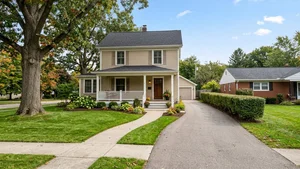
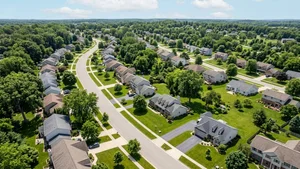
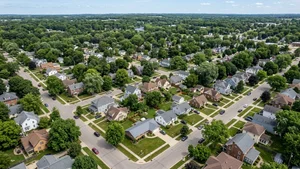
Byron Center, MI sits just south of Grand Rapids, offering a mix of suburban developments and open green spaces. The township has seen steady growth over the past few years, drawing buyers who want easy access to the city without living right downtown.
Purchasing your first house involves understanding local property taxes, specific state loan limits, and the pace of the West Michigan housing market. Buyers should prepare their finances early and get familiar with the specific neighborhoods inside the Byron Center Public Schools district.
With median prices shifting and new construction adding to the available homes, the 2026 market requires preparation. Knowing what to expect before touring properties will help you make a confident offer when the right house appears.
Current Real Estate Trends in Byron Center
The median home price in Byron Center ranges from $455,000 to $503,000 as of mid-2026. This price bracket includes a mix of older single-family homes and newer builds in recent subdivisions. Buyers looking for entry-level homes will find the most options in the lower end of that range, though these listings tend to sell quickly.
Available inventory has slowly increased over the past year, giving buyers a few more options than they had previously. However, well-maintained homes priced under $450,000 still see multiple offers within the first week on the market. You should have a pre-approval letter in hand before scheduling tours.
Average days on market can vary by property type and exact location within Byron Township. Turnkey houses near the center of town often go under contract in less than ten days. Properties needing updates or those located further out in the township might stay active for three to four weeks.
Understanding Property Taxes in Kent County
Property taxes in Michigan are based on a home's taxable value, which is generally half of its market value. Most of Byron Center sits in Kent County, though the southern edges border Allegan County. The effective property tax rate for the Byron Center area averages between 0.74% and 0.96%, depending on the specific school district boundaries.
A major consideration for new buyers is the property tax uncapping process. Under Michigan law, a home's taxable value is capped while an owner lives there, meaning it can only rise by a small percentage each year. When the property is sold, the taxable value uncaps and resets to the current state equalized value.
Buyers should never assume their future tax bill will match what the previous seller paid. You should calculate your estimated taxes based on your purchase price rather than the historical tax records. Lenders will use this updated estimate when determining your monthly payment and debt-to-income ratio.
State Loan Programs and Down Payment Assistance
The Michigan State Housing Development Authority (MSHDA) offers several programs designed to help residents purchase their first property. These state-backed loans provide favorable interest rates and can be paired with down payment assistance. To qualify for a MSHDA loan in 2026, the home's purchase price must not exceed $544,233.
Eligible buyers can access a standard $10,000 down payment assistance loan, which takes the form of a second mortgage that requires no monthly payments. For buyers whose parents have never owned a home, the state offers a $25,000 First-Generation Down Payment Assistance program. These funds can cover the down payment, closing costs, or prepaid escrow expenses.
Applicants must meet specific financial requirements to use these state funds. The minimum credit score for most MSHDA programs is 640, and buyers must complete a homebuyer education class before closing. Household income limits also apply, varying by the number of people living in the home and the county where the property is located.
Choosing Between New Construction and Existing Homes
Byron Township features a wide range of property types, from historic farmhouses to brand-new subdivisions. Newly constructed single-family homes and townhouses are common near the eastern and southern borders of the township. These new builds offer modern floor plans and energy-efficient systems, but they often sit at the higher end of the local price range.
Existing homes generally offer mature trees, larger lots, and established streetscapes. While the upfront purchase price might be lower than a new build, buyers should budget for potential repair costs. Replacing an aging roof, updating an HVAC system, or modernizing a kitchen will add to your total investment over the first few years of ownership.
If you focus your search on new construction, you should factor in homeowner association (HOA) fees. Many of the newer developments in Byron Center mandate HOA membership to cover snow removal, road maintenance, and communal landscaping. These monthly or annual dues must be included in your mortgage qualification calculations.
Daily Life: Commutes, Schools, and Amenities
Byron Center provides easy access to major employment hubs across West Michigan. Commuters can reach downtown Grand Rapids in about 15 to 20 minutes via US-131, assuming normal traffic conditions. The M-6 highway also cuts through the northern part of the township, connecting drivers to Jenison, Grandville, and the Gerald R. Ford International Airport.
The local educational system is a major draw for the area, with the Byron Center Public Schools district serving the majority of the township. The district includes several elementary buildings, an intermediate school, a middle school, and Byron Center High School. Buyers should verify exact attendance boundaries, as some edges of the township fall into neighboring districts.
Outdoor recreation and retail options are plentiful throughout the immediate area. Residents frequent Whistlestop Park for its sports fields and fishing pond, while Douglas Walker Park offers wooded trails and picnic shelters along Buck Creek. For shopping, the Tanger Outlets Grand Rapids sits just off US-131, providing dozens of retail stores within a short drive.
Frequently Asked Questions
What credit score is needed to buy a home in Byron Center, MI?
Most conventional lenders look for a score of 620 or higher, but state-backed assistance programs have different rules. If you plan to use a MSHDA down payment assistance loan, you must have a minimum credit score of 640. Buyers with scores below this threshold should work on paying down debt before applying for a mortgage.
Are there any homeowner association fees in Byron Center?
Yes, many of the newer subdivisions and townhouse communities require mandatory HOA dues. These fees can range from $200 a year for basic entrance landscaping to over $250 a month for townhomes with exterior maintenance included. You should review the specific HOA bylaws and financial statements before submitting an offer on a property.